Latex paint can turn a valuable metal part into a slow, dirty rework job. Sanding spreads dust, chemical stripping slows the line, and careless heat can mark the base metal. I see this problem every week.
At Kirin Laser, I use a pulsed laser cleaning machine as my first choice for removing latex paint from metal when surface quality matters. It strips coatings in controlled passes without physical contact. I use a CW laser cleaning machine for large, thick, non-critical areas when faster coverage matters more than the final finish.
At Kirin Laser, I build and OEM laser equipment for cleaning, welding, cutting, and marking. I do not treat paint removal as a simple “make it disappear” task. I treat it as a surface-control task. The right method must remove the coating, protect the metal, manage fumes, and leave the part ready for the next process. That is why I compare pulsed and CW laser cleaning before I recommend a machine.
How to Get Old Latex Paint Off Metal?
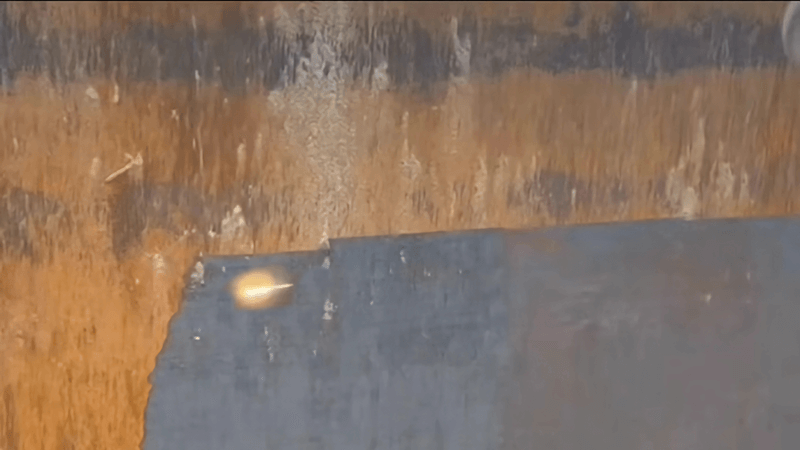
Old latex paint often looks harmless until I try to remove it. It may be thick, brittle, mixed with dirt, or bonded to a rough steel surface. A grinder can remove it, but it can also cut grooves into the metal. A chemical can soften it, but it can add handling and disposal work.
I get old latex paint off metal by first checking the coating condition and the metal underneath, then running a small laser test. For edges, thin sheet, machined parts, and parts that need a clean finish, I start with a pulsed laser cleaning machine. For broad, heavy coatings on robust steel, I may use CW laser cleaning after I confirm that heat will not harm the part.
Why a Pulsed Laser Cleaning Machine Is My First Step
I start with a pulsed laser cleaning machine because old latex paint does not fail in one uniform way. One section may lift easily, while another section may hold tight because of surface rust, primer, or years of heat exposure. A pulsed system gives me control over pulse energy, repetition rate, scan speed, and overlap. I can tune the process on a sample zone before I clean the complete part.
The goal is not to use the highest power. The goal is to use the lowest effective setting that removes the coating at a stable speed. I watch the paint reaction, the color of the exposed metal, and the texture after each pass. I also inspect corners and weld seams because those areas can hold thicker paint and dirt. On a coated aluminum or thin stainless part, this step matters even more because excess heat can change the appearance of the surface.
A pulsed laser can remove paint layer by layer1. That feature helps me stop at a primer layer when the job requires it. It also helps me preserve sharp edges, stamped markings, and machined details. I do not promise zero risk with any laser process. I validate parameters on the actual coating and part before production. Still, pulsed cleaning gives me the best control when the part value is high.
| Part condition | My first choice | Why I choose it | What I check first |
|---|---|---|---|
| Thin steel sheet | Pulsed laser cleaning machine | Lower heat exposure and fine control | Warping, finish change, edge quality |
| Machined steel component | Pulsed laser cleaning machine | Protects dimensions and sharp features | Surface roughness and masking needs |
| Large heavy steel plate | CW or pulsed laser cleaning | Choice depends on speed and finish target | Thickness, flatness, coating build |
| Aluminum housing | Pulsed laser cleaning machine | Better control on a heat-sensitive surface | Color change and surface texture |
| Rusty painted frame | Pulsed test, then selected process | Paint and corrosion may need different passes | Paint adhesion and rust depth |
My Old-Paint Test Before Full Production
I use a simple but disciplined test plan before I process a batch. First, I identify the base metal. Carbon steel, stainless steel, aluminum, and galvanized steel do not react in the same way. Next, I look at the paint stack. A single old latex layer is different from latex over primer, rust, or oil. Then I create several test squares on a representative part or coupon.
I change only one or two settings at a time. I may adjust scan speed first, then overlap, then power or pulse settings. This gives me a clear result. If I change everything at once, I cannot know what caused a good or bad surface. I photograph the test zones and compare them under consistent light. I also wipe the surface after cleaning to check whether loose residue remains.
I once worked with a shop that was wasting hours sanding latex paint off steel parts. Dust covered the work area, and the team kept scratching the metal. We moved the edge and detail work to a pulsed laser cleaning machine. We used a CW laser cleaning machine on larger flat areas after testing the heat effect. The team reduced cleanup work, protected the surface, and moved parts into coating preparation much faster.
This test process also protects a procurement decision. I tell buyers not to select a laser cleaner from a power number alone2. A machine should be evaluated with their real parts, real coating thickness, target cycle time, fume extraction setup, and finish standard. A good result on a clean test plate does not always predict a good result on an old production component.

What Dissolves Dried Latex Paint?
Dried latex paint creates a false expectation. Fresh latex paint responds to water much better than fully cured paint. Once it has cured, water alone may do very little. Strong chemical strippers can soften some coatings, but they can also create odor, residue, worker exposure, and disposal issues.
No single liquid dissolves every dried latex paint film on metal. Chemical products may soften a coating, but I prefer controlled laser ablation when I need predictable removal and a clean metal surface. A pulsed laser cleaning machine removes the coating through focused energy rather than soaking the whole part in a chemical.
Dried Latex Paint Does Not Behave Like Fresh Paint
I separate the word “dissolve” from the real production question. In a workshop, the question is usually not whether a liquid can soften paint. The question is whether the process can remove paint at a predictable cost without harming the part or creating a larger cleanup problem. Dried latex paint may soften under a stripper, but it can become sticky. Then the operator still needs scraping, wiping, rinsing, or drying. That work becomes harder around holes, threads, corners, and welded joints.
Mechanical removal has the same problem in another form. Abrasive pads, wire wheels, and sanding discs can be useful for rough work. Yet they create dust and can leave scratches3. These scratches may be unacceptable before powder coating, painting, bonding, or inspection. They also create inconsistency because each operator uses different pressure and angle.
With laser cleaning, I focus energy on the coating zone. The process is non-contact, so I do not press a wheel or scraper against the part. The removed paint becomes fume and fine residue, which is why a proper extraction and filtration system is part of the machine cell, not an optional extra. I also treat unknown old paint carefully. I require coating identification or a risk review before processing because the composition of legacy paint can change the safety plan.
| Removal method | What it does well | Limits I consider | Best fit |
|---|---|---|---|
| Warm water and detergent | Helps with fresh or lightly soiled paint | Usually weak on fully cured latex | Cleanup before another method |
| Chemical stripper | Can soften certain cured coatings | Residue, dwell time, handling, disposal | Small jobs with compatible chemistry |
| Scraper or wire wheel | Low equipment cost | Scratches, dust, slow work near details | Rugged parts with low finish demands |
| Abrasive blasting | Removes heavy coatings quickly | Media handling and surface profile change | Large parts with controlled containment |
| Pulsed laser cleaning machine | Selective, detailed, controlled removal | Needs parameter testing and extraction | High-value, detailed, finish-sensitive parts |
| CW laser cleaning machine | Fast coverage on broad areas | Higher heat input risk on sensitive parts | Thick coatings on robust, flat surfaces |
Pulsed Laser Cleaning Machine Versus Chemical Softening
I choose a pulsed laser cleaning machine when I need a stable result across many parts. The initial equipment investment is higher than buying a can of stripper. Still, the comparison should include labor, consumables, waste, drying time, surface rework, and production flow. A low-cost chemical process can become expensive when workers wait for dwell time and then spend more time wiping residue from every recess.
Pulsed cleaning can also improve repeatability. I can save a parameter set for a part family, then use the same scan pattern and settings for the next batch. I still need to confirm the coating is comparable. Paint thickness, color, age, and contamination can affect removal.4 But the process is easier to document than hand scraping.
I do not describe laser cleaning as “no cleanup.” That would be misleading. The cell needs fume extraction, filters, correct laser safety controls, and routine inspection. The operator needs training. The coating debris still has to be managed according to the actual paint composition and local rules. The advantage is that I remove the paint without adding chemical stripper to the workflow and without blasting abrasive media across the whole part.
For a buyer, I compare the total job. If the business strips a few painted brackets each month, a laser may not be the first investment. If the business processes repeat parts, works near sensitive features, wants less manual rework, or needs a cleaner path to coating, a pulsed laser cleaning machine can change the economics.
What Is the Best Thing to Remove Paint From Metal?
The best paint-removal tool depends on the part, the paint, the volume, and the finish standard. A tool that works on a heavy steel gate may be wrong for a stainless enclosure or a precision fixture. I avoid one-size-fits-all answers because they create damaged parts and poor purchasing decisions.
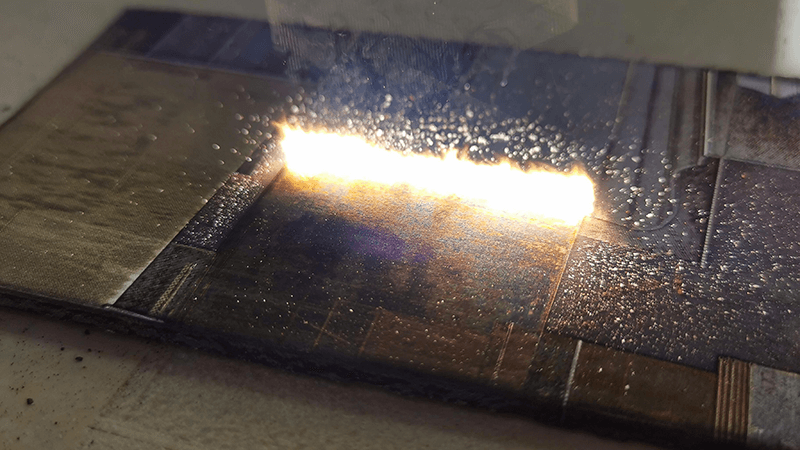
For high-value metal parts, I consider a pulsed laser cleaning machine the best all-around option because it offers selective paint removal and fine process control. For large, thick-coated, non-critical steel surfaces, a CW laser cleaning machine can be the better option when high throughput is more important than a refined surface finish.
The Best Tool Changes With Part Risk
I use part risk to decide what “best” means. A painted steel beam may have low risk. If its surface will be blasted and recoated, a fast high-coverage method may be enough. A machined fixture has high risk. Its dimensions, sealing faces, threads, and identification marks may all matter. In that case, a slower but more controlled method protects more value.
I also consider what comes after paint removal. If the part will be welded, I need a clean enough area to support stable welding5. If it will be powder coated, I need a consistent surface without loose paint, oil, or unwanted profile changes. If it will be laser marked, I may need a clean local zone without changing the surrounding finish. The next process shapes the removal choice.
At Kirin Laser, I often recommend a system plan instead of a single machine claim. A customer may use pulsed laser cleaning for detail zones, seams, and edges. The same customer may use CW cleaning for wide flat surfaces. This hybrid approach can improve throughput without forcing the most sensitive area to accept the risks of a fast, high-heat process.
| Decision factor | Pulsed laser cleaning machine | CW laser cleaning machine | My buying view |
|---|---|---|---|
| Precision around edges | Strong | Moderate, depends on setup | Choose pulsed for fine features |
| Large-area speed | Moderate | Strong | Choose CW when area and coating are heavy |
| Heat control | Stronger control potential | More heat accumulation risk | Test thin or sensitive substrates |
| Surface finish | Better for refined targets | Can be suitable for rough work | Define an acceptance sample |
| Automation | Good with scanner and motion system | Good with wide processing head | Match it to part handling |
| Operator skill | Requires trained setup and inspection | Requires trained setup and heat control | Include training in project scope |
CW Laser Cleaning Machine for Broad Heavy Work
A CW laser cleaning machine delivers a steady beam. I use it with care because continuous energy can remove coating quickly over a large area, but it can also increase heat input. On thick, robust steel parts, that trade can be useful. It can help a shop move through large painted surfaces where the final surface is not highly cosmetic and minor texture changes are acceptable.
I do not place CW cleaning in the “cheap and easy” category. It still requires correct optics, scan width, working distance, travel speed, shielding, and extraction. The operator must keep the tool moving. A pause in one location can create too much heat6. I also watch for coating burning, smoke load, and color change on the substrate. More power is not the same as better removal.
I reserve CW cleaning for broad, thick, non-critical jobs because that is where speed can outweigh the need for fine layer control. I use pulsed cleaning when I need to stop close to the substrate, keep sharp details, or protect a finish. A buyer should ask for a demonstration on the actual part, not a generic painted plate. A good supplier should show the surface before and after, explain the extraction plan, and state the expected processing window.
How to Get Latex Paint Off Metal?
A reliable latex-paint removal process starts before the laser turns on. I need to know what is on the metal, what the metal is, and what result the next operation needs. This preparation prevents most problems that people blame on the machine.
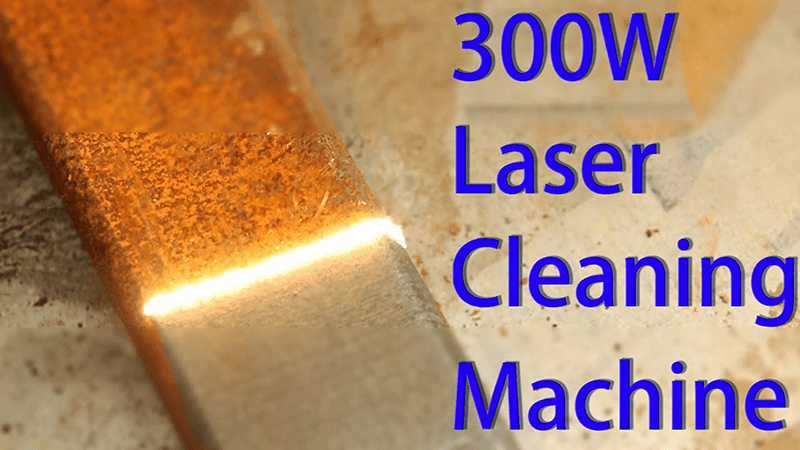
I get latex paint off metal by inspecting the coating, testing laser parameters on a small area, setting up fume extraction and laser safety controls, cleaning in controlled passes, and inspecting the exposed metal before the next process. I use pulsed cleaning for detail and finish quality, while I use CW cleaning for tested high-coverage work on robust substrates.
Laser Paint Removal From Metal: My Practical Workflow
I begin with part intake. I record the material, coating type when known, coating thickness range, part geometry, contamination, and the required final finish. I then identify whether the part is a one-off repair, a small repeat batch, or a production program. That affects whether I use a handheld system, a workbench cell, an automated scanner, or a robot-assisted line.
Next, I prepare a test area. I clean loose dirt or oil if it blocks stable laser interaction. I set extraction close enough to capture the plume at the source. Then I test a small matrix of settings. With a pulsed system, I may tune power, frequency, scan speed, and overlap. With a CW system, I focus on power, scan pattern, travel speed, and heat response. I use visual inspection and, when needed, roughness or coating checks to confirm the result.
After I approve the test, I process the part in planned passes. I do not chase every dark mark with more energy. Some marks may be primer, corrosion, or a surface color change that needs a different treatment. I stop and inspect when the process no longer behaves as expected. That discipline prevents damage.
| Workflow stage | What I do | Why it matters |
|---|---|---|
| Identify the part | Confirm metal, coating history, and next process | Prevents wrong parameters and wrong expectations |
| Review coating risk | Treat unknown or legacy coatings as a safety issue | Guides extraction and waste handling |
| Build a test matrix | Run controlled settings on a sample area | Finds an effective removal window |
| Set extraction and safeguards | Use the proper cell controls and fume capture | Protects the operator and work area |
| Clean in passes | Remove coating without forcing one aggressive pass | Protects the base metal |
| Inspect and document | Check finish, residue, heat effects, and cycle time | Supports repeatable production |
Control Points I Never Skip
I never skip fume control. Laser cleaning is a thermal process, and paint removal can create fumes and particles.7 I plan local extraction, filtration, and waste handling around the real coating. I also use the correct laser safety controls for the machine and cell. This includes controlled access, beam containment where needed, operator procedures, and approved protective equipment. Safety design is part of the project cost from the first quotation.
I never skip a substrate check. Carbon steel can tolerate a different process than aluminum. Galvanized surfaces need extra care because the coating system and fumes can be different. Stainless steel may need an appearance standard after cleaning. A customer who simply asks for “paint removal speed” is not yet giving me enough information to recommend a reliable solution.
I also never skip the next-process test. A surface may look clean, but it may not be ready for welding, bonding, coating, or inspection.8 I ask the production team to run a real downstream test. For example, if the part will be recoated, I review coating adhesion after laser cleaning. If it will be welded, I review the weld area and spatter behavior. This turns laser cleaning from a stand-alone demonstration into a working production method.

Conclusion
I remove latex paint from metal by choosing the process around the part, not around a single power rating. At Kirin Laser, I start with pulsed laser cleaning when I need controlled stripping, protected edges, and a better surface finish. I use CW laser cleaning for wide, thick, robust surfaces after a heat test confirms it is suitable. I always include coating review, sample testing, fume extraction, safety controls, and final inspection. That approach helps my customers reduce manual cleanup while keeping the metal ready for its next job.
-
"The Effects of Laser Cleaning and Induction Coating Removal on ...", https://libraetd.lib.virginia.edu/public_view/8336h306g. Research on pulsed-laser paint stripping describes selective or incremental coating removal through controlled laser ablation, including removal of coating layers while limiting substrate damage. Evidence role: mechanism; source type: paper. Supports: A pulsed laser can remove paint incrementally, allowing better control over how much coating is removed.. Scope note: The source would support the feasibility of layerwise removal under controlled conditions; it does not guarantee that a primer layer can always be preserved in production. ↩
-
"Research on Laser Cleaning Technology for Aircraft Skin Surface ...", https://pmc.ncbi.nlm.nih.gov/articles/PMC11123212/. Laser-cleaning studies and reviews emphasize that cleaning quality and substrate effects depend on multiple interacting parameters, including power, fluence, pulse duration, scanning speed, repetition rate, coating properties, and substrate material. Evidence role: expert_consensus; source type: paper. Supports: Laser cleaner selection should not be based only on nominal power; real parts, coatings, process settings, and finish requirements must be evaluated.. Scope note: The evidence supports a technical evaluation principle rather than a procurement rule for every buyer or application. ↩
-
"Abrasive Blasting Hazards in Shipyard Employment - OSHA", http://www.osha.gov/maritime/guidance/shipyard-guidance. Occupational-safety or surface-preparation guidance should document that abrasive sanding, grinding, or wire-wheel paint removal generates airborne dust and can alter or abrade the substrate surface. Evidence role: general_support; source type: government. Supports: Mechanical paint removal methods can create dust and leave scratches or surface changes.. Scope note: The source may address abrasive paint removal broadly rather than the exact combination of pads, wire wheels, and sanding discs named in the article. ↩
-
"Research Progress and Challenges in Laser-Controlled Cleaning of ...", https://pmc.ncbi.nlm.nih.gov/articles/PMC9410451/. A laser-cleaning study should support that coating removal efficiency depends on material and process variables such as coating thickness, optical absorption, surface condition, and contamination. Evidence role: mechanism; source type: paper. Supports: Paint properties and surface condition can affect laser-cleaning removal results.. Scope note: Individual studies may test specific coatings or substrates, so the support is contextual rather than proof for every latex paint formulation. ↩
-
"Aluminum Abrasives - American Welding Society", https://app.aws.org/forum/topic_show.pl?tid=24970. Welding-quality guidance explains that coatings, oil, oxides, and other contaminants near a joint can destabilize welding and contribute to defects such as porosity or lack of fusion. Evidence role: expert_consensus; source type: institution. Supports: Paint removal before welding should achieve a surface condition clean enough to support stable welding.. ↩
-
"[PDF] Laser Surface Cleaning - OSTI", https://www.osti.gov/servlets/purl/491965. Laser-processing references describe dwell time and scan speed as primary variables controlling delivered energy per unit area and consequent temperature rise in the workpiece. Evidence role: mechanism; source type: education. Supports: If the laser head pauses or moves too slowly, localized energy deposition can create excessive heat.. Scope note: The threshold for damage or excessive heating is material- and coating-specific and must be established experimentally for a given part. ↩
-
"Guidelines for Laser Safety and Hazard Assessment - OSHA", http://www.osha.gov/enforcement/directives/std-01-05-001. Occupational-safety and laser-materials literature describes laser ablation/cleaning as a process that thermally and photomechanically removes surface material and can generate airborne particulate and gaseous by-products; this supports the need to treat paint removal as a fume and particle exposure issue, although emissions vary by coating chemistry, substrate, and laser settings. Evidence role: mechanism; source type: government. Supports: Laser paint removal is a thermal/ablation process that can produce fumes and particles.. Scope note: The support is contextual because the exact emission profile depends on the specific paint system and process parameters. ↩
-
"[PDF] Laser Ablation - Corrosion Removal and Adhesion Improvements", https://www.waru.edu/sites/default/files/Migrated/CopDocuments/Laser%20Ablation%20-%20Corrosion%20Removal%20and%20Adhesion%20Improvements.pdf. Surface engineering and adhesion literature distinguishes visual cleanliness from functional surface preparation, showing that residues, oxide layers, roughness, and surface energy can affect coating adhesion, bonding, welding, and inspection outcomes; this supports downstream validation after cleaning, although acceptance criteria are process-specific. Evidence role: general_support; source type: paper. Supports: A visually clean laser-cleaned surface may still require downstream testing before welding, bonding, coating, or inspection.. Scope note: The support is general because readiness depends on the downstream process, material, and applicable acceptance standard. ↩