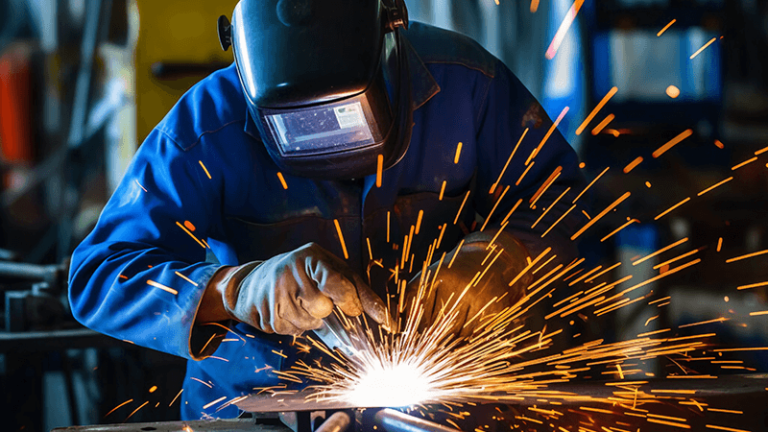
Weld slag, heat tint, and spatter can turn a clean fabrication job into hours of grinding. I have seen good operators lose time because their finishing tools could not keep up with their welding speed.
I do not recommend building a slag-cleaning machine around power alone. I recommend a 4-in-1 laser welding machine with laser cleaning mode. It lets operators weld, remove heat tint, oxides, and light spatter, then move directly into finishing with fewer tool changes.
At Kirin Laser, I work with fabricators, distributors, and OEM partners who want to shorten the distance between welding and final delivery. A welding job does not end when the bead is complete. The surface still needs to look clean, consistent, and ready for the next process. That is where laser cleaning becomes part of the welding workflow, not just a separate cleaning task.

How to Clean Welding Slag?
Grinding slag by hand can be slow, noisy, and hard to control. I often see operators remove more base material than necessary. That creates extra finishing work and can leave visible grinding marks on the part.
The best way to clean welding slag depends on the slag type and material. Thick, hard slag may still need mechanical removal first. For heat tint, oxides, light spatter, and surface residue, a laser cleaning machine can clean the weld area quickly with less contact and less damage to the base material.
First, identify what is actually on the weld
I always tell buyers not to call every post-weld residue “slag.” Different materials need different cleaning methods.
True slag often comes from stick welding, flux-cored welding, or other flux-based processes. It can form a hard layer on top of the weld bead. Heat tint is different. It is a color change caused by heat on stainless steel, titanium, and other metals. Light spatter is also different. It usually appears as small metal particles around the weld seam.
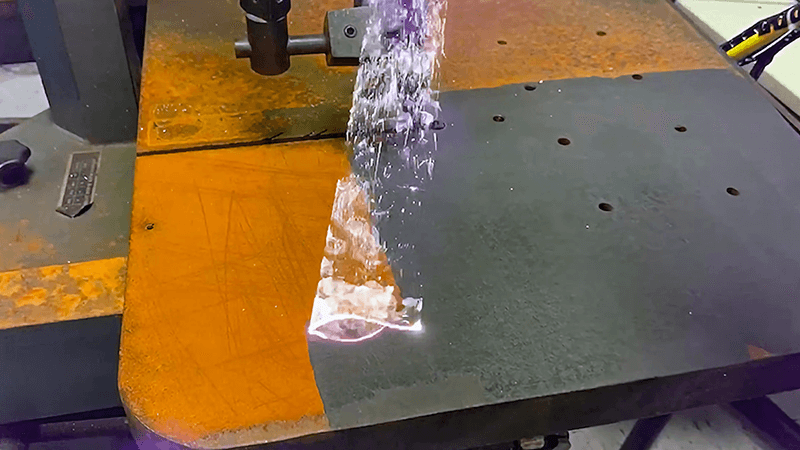
Laser cleaning works very well on heat tint, surface oxides, oil residue, and light spatter.1 It can also help remove some lighter slag layers. Still, I do not present laser cleaning as a replacement for every mechanical tool. Very thick slag may need a chipping hammer or scraper before laser cleaning starts.
Use laser cleaning as part of the welding flow
In a traditional setup, an operator may weld with one tool, use an angle grinder next, then use a brush or chemical treatment after that. Each step takes time. Each step also creates more handling and more risk of surface damage.
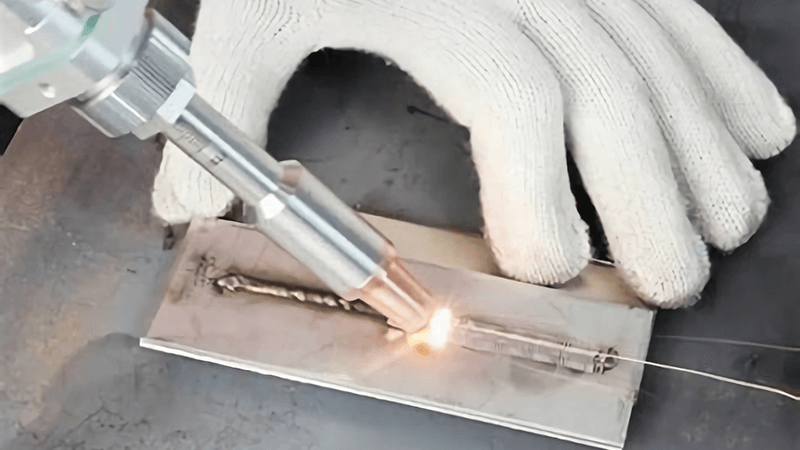
A 4-in-1 laser welding machine changes that workflow. The operator can switch from welding mode to cleaning mode on the same machine. The operator does not need to move the workpiece to another station. The operator can clean the weld zone soon after welding and prepare it for inspection, polishing, painting, or assembly.
| Surface condition | Common traditional method | Laser cleaning value | My recommendation |
|---|---|---|---|
| Thick flux slag | Chipping hammer or scraper | Limited before bulk removal | Remove heavy slag first, then laser clean |
| Light slag residue | Brush or grinder | Fast surface cleanup | Use laser cleaning after basic removal |
| Stainless heat tint | Grinding or chemical pickling | Very effective for surface treatment | Use laser cleaning mode |
| Light weld spatter | Wire brush or grinder | Good for non-contact removal | Use laser cleaning mode |
| Surface oxide | Chemical cleaning or abrasive tools | Good for targeted cleaning | Use laser cleaning mode |
| Oil and workshop residue | Solvent wiping | Good for dry cleaning | Test laser parameters first |
Match the cleaning beam to the weld area
I do not focus only on laser power. Beam width, scan pattern, and cleaning speed also matter.2 A narrow beam can concentrate energy in one area. A wider cleaning beam can cover more surface around the weld seam.
For many fabrication jobs, a wider cleaning beam gives better results because the goal is not to cut into the metal. The goal is to lift oxides, discoloration, and light contamination from the surface.
I once worked with a metal fabrication shop that spent more time grinding weld discoloration and slag than welding. Their operators hated switching between the welder, grinder, and cleaning tools. We helped them use a 4-in-1 laser welding machine with laser cleaning mode. They welded first, cleaned the surface right after, and kept the job moving without extra rework.
That kind of workflow is where I see the real value. The machine should help the operator keep momentum.
How to Make a Welding Machine at Home?
Many people search for ways to make a welding machine at home because they want lower equipment costs. I understand that goal. Still, I do not recommend building a high-power welding or laser cleaning machine from separate electrical parts without proper engineering, protection, and testing.
A reliable welding machine needs more than a power source. It needs stable controls, cooling, safety systems, optical protection, wire feeding, welding settings, and service support. For business use, I recommend buying or OEM customizing an integrated 4-in-1 laser welding machine instead of building one from raw parts.
A welding machine is a complete system
When buyers ask me about building a machine, I usually ask what they really need. Some buyers want a lower purchase cost. Some buyers want their own brand. Some buyers want a compact unit for local distribution. Some buyers want laser welding and cleaning in one machine.
Those needs do not always require a home-built machine. They often require an OEM solution.
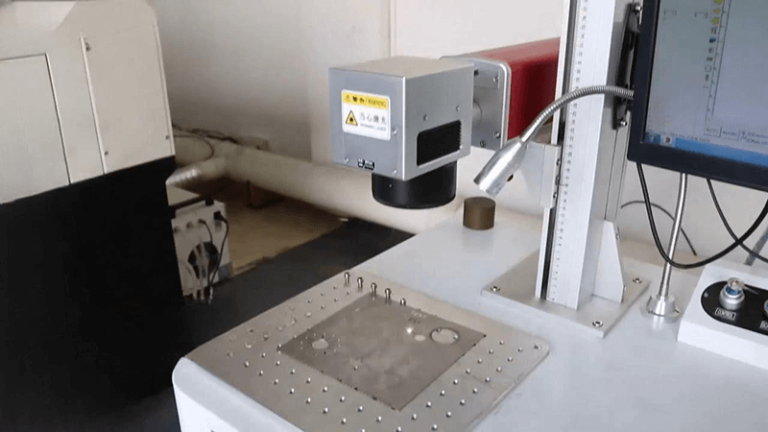
A 4-in-1 laser welding machine usually combines laser welding, laser cleaning, seam cleaning, and cutting functions. The exact functions can vary by configuration. The machine needs a stable fiber laser source, welding head, control system, cooling system, wire feeder, safety interlock, emergency stop, cables, and enclosure design.3
Each part affects machine performance. A poor cooling system can reduce stability. A weak wire feeder can affect weld consistency. Poor parameter control can create burn-through, poor penetration, or uneven cleaning results.4
Compare a DIY build with an integrated OEM machine
| Factor | DIY machine build | OEM 4-in-1 laser welding machine |
|---|---|---|
| Initial purchase cost | May look lower at first | Higher upfront cost |
| Electrical safety | Depends on personal skill | Designed with integrated safety features |
| Laser source matching | Hard to optimize | Matched by manufacturer |
| Cooling system | Often separate and inconsistent | Integrated with system design |
| Welding and cleaning switch | Requires custom setup | Built into machine controls |
| Technical support | Limited | Available from supplier |
| Branding options | Difficult | Supports OEM and private label options |
| Import and resale | Harder to standardize | Easier for distributors |
Build the workflow, not the machine from scratch
At Kirin Laser, I focus on helping buyers build a usable welding workflow. That is different from asking them to assemble a machine from separate components.
For a distributor, the real question is often this: Can I sell a machine that my customers can learn, maintain, and trust?
That is why I recommend starting with a defined application. A stainless steel kitchen equipment factory needs different settings than a metal furniture workshop. A sheet metal shop may need fast seam cleaning. An automotive repair workshop may care more about spot repair and visual finish.
I help buyers choose the laser source, machine power, welding gun configuration, wire feeder, language settings, logo placement, cabinet color, manuals, and packaging. This gives them a product that fits their market without forcing them to develop the entire machine from zero.
For home use, basic welding tools may be enough for simple repair work. For commercial production, I believe an integrated laser welding machine is the safer and more practical route.

What Is the Best Tool to Remove Slag?
The best tool depends on how thick the residue is, what metal you are working with, and what finish the customer expects. I do not believe one tool is perfect for every welding job.
For thick and heavy slag, a chipping hammer or scraper is often the fastest first step. For heat tint, oxides, light spatter, and surface discoloration, a laser cleaning machine is often the better tool because it can reduce grinding marks, lower material loss, and improve finishing speed.
Traditional tools still have a place
A slag hammer is simple and cheap. It works well when the slag layer is thick and brittle. A wire brush can remove loose residue. An angle grinder can remove tough material quickly.
Still, these tools have limits. A grinder creates dust, sparks, noise, and surface scratches. It can also remove base metal if the operator uses too much pressure. A brush can leave residue behind. It can also cause cross-contamination when the same brush is used on carbon steel and stainless steel.5
For many shops, the biggest cost is not the tool itself. The biggest cost is operator time. Every extra minute spent grinding adds labor cost. Every scratched surface adds polishing work. Every damaged edge can lead to rejection or rework.
Laser cleaning changes the finishing cost
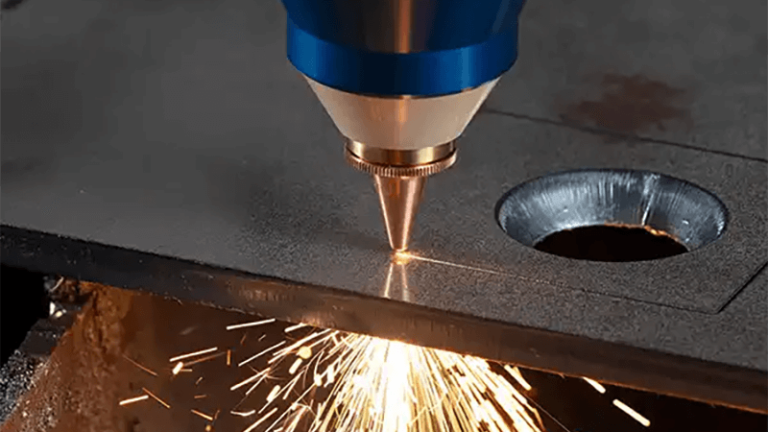
I see laser cleaning as a precision finishing tool. It is not only a “slag remover.” It helps the operator control the surface condition near the weld bead.
With the right settings, a laser cleaning head can remove oxidation and discoloration without pushing a rotating abrasive wheel into the workpiece.6 This matters when the part has a visible surface. It also matters when the part will be painted, powder coated, polished, or used in food equipment, furniture, cabinets, or decorative metal products.
| Tool | Best use case | Main advantage | Main limitation |
|---|---|---|---|
| Chipping hammer | Thick, brittle slag | Low cost and simple | Slow for large production |
| Scraper | Local heavy residue | Good for targeted removal | Can scratch surfaces |
| Wire brush | Loose residue and light cleanup | Easy to use | Can contaminate stainless steel |
| Angle grinder | Heavy residue and shaping | Fast removal | Dust, noise, grinding marks |
| Chemical cleaner | Oxide and surface treatment | Can clean complex areas | Requires chemical handling |
| Laser cleaning machine | Heat tint, oxides, light spatter, surface residue | Non-contact and controlled | Needs proper settings and training |
Use a combined approach for difficult welds
I do not tell customers to throw away every traditional tool. I tell them to use each tool where it makes sense.
For thick slag, remove the bulk material first. Then use laser cleaning to improve the surface. For stainless steel heat tint, laser cleaning can become the main tool. For light spatter around a visible weld seam, laser cleaning can reduce the need for grinding.
This combined approach gives the shop more control. The operator does not need to force one tool to solve every problem.
A 4-in-1 laser welding machine makes this easier because the cleaning function is already part of the equipment. The operator does not need to buy a separate grinder station, move the part, and repeat the setup.
From my experience, the best tool is the one that reduces total finishing time. That is why I focus on the complete process, not only the cleaning step.
Which Brush Is Used for Cleaning the Welding Slag?
Using the wrong brush can damage the surface or create contamination. This is a common problem in shops that weld both carbon steel and stainless steel. I often see one brush used for many materials, even when the finish requirements are different.
For carbon steel, a carbon steel wire brush is common. For stainless steel, I recommend a dedicated stainless steel wire brush that is never used on carbon steel. For softer metals or delicate surfaces, a brass brush can be a better choice. In laser cleaning workflows, a brush may only be needed for heavy loose residue.
Choose the brush based on the base material
A carbon steel brush is usually suitable for mild steel fabrication. It is strong and affordable. Still, it should not be used on stainless steel.
When a carbon steel brush touches stainless steel, it can leave small iron particles on the surface. Those particles can later rust. This can make the stainless steel part look defective even when the weld itself is sound.
For stainless steel, I recommend using a dedicated stainless steel wire brush. The brush should be marked clearly and stored separately. Operators should not use it on carbon steel.
Brass brushes are softer. They can be useful for softer metals and lighter cleanup work. They may reduce the risk of scratching compared with a hard steel brush.7
| Material | Recommended brush | Reason | Important note |
|---|---|---|---|
| Mild steel | Carbon steel wire brush | Strong and low cost | Do not use on stainless steel |
| Stainless steel | Dedicated stainless steel wire brush | Reduces cross-contamination risk | Keep separate from carbon steel tools |
| Aluminum | Brass brush or soft non-metal brush | Helps reduce surface scratching | Test on a small area first |
| Copper | Brass brush or soft brush | Better for softer surface | Avoid aggressive brushing |
| Painted metal | Soft non-metal brush | Reduces coating damage | Use laser cleaning carefully if needed |
Brush cleaning has limits
A brush can remove loose slag particles. It can also clean light debris from the weld surface. Still, a brush cannot always remove oxidation, heat tint, or stubborn surface contamination evenly.
A brush also depends heavily on operator pressure. One operator may brush lightly. Another operator may press hard and leave visible marks. That makes the final result less consistent.
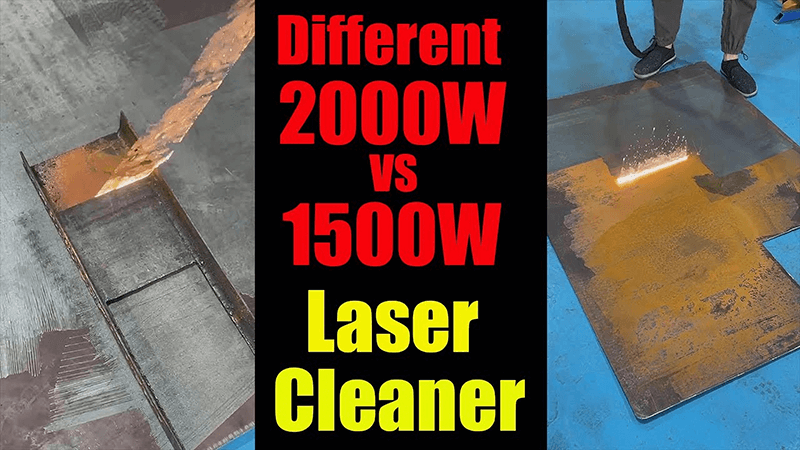
This is one reason why I recommend laser cleaning for visible metal products. Laser cleaning gives the operator more repeatable control. The operator can adjust the cleaning path, beam width, speed, and power settings based on the material and weld condition.
Use brushes as support tools, not the whole process
In many shops, the brush should be a support tool. It can remove loose particles before inspection. It can clean areas that need quick manual attention. It can also help after heavy slag removal.
Still, I do not think a wire brush should carry the whole finishing process when the shop has high output requirements.
For a fabricator producing stainless cabinets, metal furniture, food equipment, doors, frames, or decorative parts, the weld appearance matters. Customers often notice discoloration, grinding lines, and uneven finishing before they notice the technical weld details.
That is where a 4-in-1 laser welding machine gives a real advantage. The operator can weld, switch to cleaning mode, remove heat tint or light spatter8, and create a cleaner surface before the part moves to the next process.
Conclusion
I believe the best welding slag cleaning machine is not built around raw power alone. It is built around a faster workflow. Heavy slag may still need a hammer, scraper, or brush first. Still, laser cleaning can reduce grinding, improve surface consistency, and shorten finishing time for heat tint, oxides, and light spatter. At Kirin Laser, I focus on 4-in-1 laser welding machines that let operators weld and clean in one workflow. That helps fabricators reduce rework, protect the base material, and move parts through production with more confidence.
-
"Research Progress and Challenges in Laser-Controlled ...", https://pmc.ncbi.nlm.nih.gov/articles/PMC9410451/. A peer-reviewed laser-cleaning study should support that laser irradiation can remove surface oxides and organic contaminants from metals through ablation, evaporation, or related surface-interaction mechanisms. Evidence role: mechanism; source type: paper. Supports: Laser cleaning can remove heat tint, surface oxides, oil residue, and light spatter from weld areas.. Scope note: Such evidence supports the general capability of laser cleaning, but performance depends on material, laser wavelength, pulse duration, fluence, and contamination thickness; it may not directly prove effectiveness for every listed residue. ↩
-
"Research Progress and Challenges in Laser-Controlled Cleaning of ...", https://pmc.ncbi.nlm.nih.gov/articles/PMC9410451/. A laser-cleaning process study should show that cleaning results are governed by process parameters such as beam size or spot overlap, scanning strategy, scan speed, and laser fluence. Evidence role: mechanism; source type: paper. Supports: Beam width, scan pattern, and cleaning speed affect laser-cleaning performance.. Scope note: Parameter effects are usually reported for specific materials and laser systems, so the citation would provide process context rather than universal parameter settings. ↩
-
"How to Choose the Right Laser Welding System for Your Workshop", https://eminacademy.com/blog/how-to-choose-the-right-laser-welding-system-for-your-workshop.html. An educational or institutional source on laser welding equipment can document that industrial laser welding systems are composed of a laser source, beam-delivery optics or welding head, control hardware, cooling, filler-wire delivery where used, and safety provisions such as interlocks and emergency stops. Evidence role: definition; source type: education. Supports: A complete laser welding machine requires multiple integrated subsystems, including the laser source, welding head, controls, cooling, wire feeding, safety devices, cabling, and enclosure design.. Scope note: The source may describe standard laser welding system architecture rather than this article’s exact 4-in-1 commercial configuration. ↩
-
"The Detection of Burn-Through Weld Defects Using ... - PMC", https://pmc.ncbi.nlm.nih.gov/articles/PMC5793626/. A peer-reviewed or institutional source on laser welding parameters can support that laser power, travel speed, focus position, and related settings influence penetration depth and defects such as burn-through, while laser-cleaning studies show that process parameters affect surface-cleaning uniformity. Evidence role: mechanism; source type: paper. Supports: Poor control of laser process parameters can cause welding defects or inconsistent cleaning results.. Scope note: One source may not cover both welding defects and cleaning uniformity, so separate welding and laser-cleaning references may be needed for full support. ↩
-
"Austenitic Stainless Steel Wire Brushes - American Welding Society", https://app.aws.org/forum/topic_show.pl?tid=26941. Stainless-steel fabrication guidance notes that iron contamination from carbon-steel tools or brushes can impair stainless surfaces and promote rust staining, supporting the warning against using the same wire brush on carbon steel and stainless steel. Evidence role: mechanism; source type: institution. Supports: Using the same brush on carbon steel and stainless steel can cause cross-contamination of stainless surfaces.. ↩
-
"Oxide Removal Mechanism and Process Optimization During ... - PMC", https://pmc.ncbi.nlm.nih.gov/articles/PMC11944184/. Reviews and experimental studies of laser cleaning describe removal of oxide layers and surface contaminants by laser-material interaction as a non-contact process, supporting the claim that laser cleaning can remove oxidation without mechanical abrasive contact. Evidence role: mechanism; source type: paper. Supports: Laser cleaning can remove oxidation and discoloration through a controlled, non-contact process.. Scope note: Effectiveness depends on laser parameters, substrate, oxide thickness, and surface condition; the evidence supports capability rather than guaranteed results in every weld-cleaning case. ↩
-
"[PDF] Material Overview • ANSI", https://www.purdue.edu/bidc/wp-content/uploads/2021/08/ISOGrade.pdf. Materials property references show that brass is generally softer than carbon steel or stainless steel, which provides a basis for expecting lower scratching risk when brushing softer metals under comparable conditions. Evidence role: mechanism; source type: education. Supports: Brass brushes, being softer than steel brushes, may reduce scratching risk on softer metals.. Scope note: Hardness data support the plausibility of reduced scratching, but actual surface damage also depends on wire geometry, pressure, speed, and contamination. ↩
-
"Research Progress and Challenges in Laser-Controlled Cleaning of ...", https://pmc.ncbi.nlm.nih.gov/articles/PMC9410451/. Studies and technical reviews of laser cleaning report that pulsed or controlled laser irradiation can remove oxide layers and surface contaminants from metals by parameter-dependent ablation or thermal effects. Evidence role: mechanism; source type: paper. Supports: Laser cleaning can be used after welding to remove heat tint or light spatter from metal surfaces.. Scope note: This supports laser cleaning as a method for removing oxides and contaminants; it does not prove that every 4-in-1 laser welding machine will remove all heat tint or spatter under production conditions. ↩