Paint removal looks simple until smell, waste, burns, residue, and damaged surfaces start costing real money. I used to ask which chemical worked fastest. Now I ask which method removes paint with less risk.
The best chemical for paint removal depends on the coating and substrate, but for industrial use, I do not see chemicals as the best answer anymore. Laser cleaning can remove paint without chemical residue, toxic waste, or heavy secondary cleanup.
Many buyers search for the strongest paint remover because they want speed. I understand that. But in factories, repair shops, mold cleaning, metal refurbishment, and production lines, speed is not the only cost. The real cost includes labor, disposal, safety training, downtime, rework, and surface damage. From Kirin Laser’s point of view, the better discussion is not only “which chemical removes paint?” The better discussion is “which paint removal method gives repeatable results with less risk?”
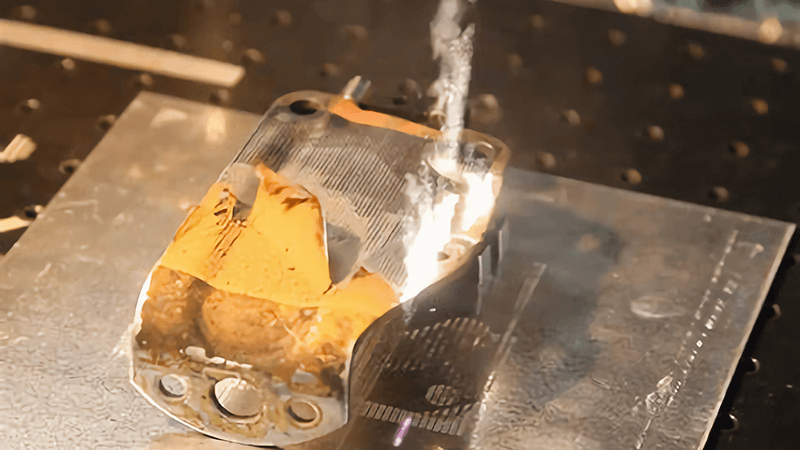
%[laser cleaning machine for paint removal](Continuous laser cleaning of rust on rebar "laser cleaning machine for paint removal")
What is the strongest chemical to remove paint?
Strong chemical paint strippers can break down thick coatings fast, but strength also brings risk. If a remover attacks paint aggressively, it may also create toxic vapor, soften nearby materials, leave residue, or make waste disposal harder.
Methylene chloride was once known as one of the strongest paint stripping chemicals, but it carries serious health and regulatory concerns. For industrial buyers, a laser cleaning machine is often a better long-term option because it removes coatings by controlled laser energy instead of chemical reaction.
Why “strongest” is not always “best”
I understand why procurement managers ask for the strongest chemical. They have production pressure. They need old coating removed fast. They may have operators waiting, machines idle, and customers asking for delivery. But I have seen many cases where the strongest chemical created a second problem1 after solving the first one.
A strong chemical remover can soften paint, but it can also create sludge. That sludge must be collected, handled, and disposed of. If the coating contains heavy metals or other hazardous materials, the waste issue becomes more serious. If the operator uses the chemical in a closed space, ventilation becomes a safety topic. If residue stays on the surface, the next coating, welding, bonding, or inspection step may fail.
This is why I no longer think only about removal speed. I think about the full process. A laser cleaning machine uses focused laser energy to remove paint, rust, oxide, oil, and other surface layers. The operator can adjust power, frequency, scan width, and cleaning speed. That makes the process more repeatable than hand brushing chemicals onto a surface.
| Method | Main Strength | Main Weakness | Best Fit |
|---|---|---|---|
| Strong chemical stripper | Fast coating softening | Odor, residue, waste, safety risk | Small jobs or special coatings |
| Sandblasting | High removal rate | Dust, abrasive media, rough surface | Heavy steel structures |
| Grinding | Low equipment cost | Labor heavy, uneven result | Small repair areas |
| Laser cleaning | Controlled, dry, low residue | Higher upfront machine cost | Industrial paint removal and surface prep |
Why I prefer laser cleaning for industrial paint removal
From Kirin Laser’s position, I do not say chemicals never work. They do work. But I believe industrial customers need a cleaner and more controlled method.
A customer once used chemical paint removers on metal molds. The remover worked, but the operators complained about the smell2. They also spent too much time wiping residue and preparing the mold surface again. The company did not switch to laser cleaning because they loved new technology. They switched because downtime was hurting them.
After a few weeks, they told me the cleaned surface became more consistent. They also almost eliminated secondary polishing. That detail matters. Paint removal is not only about removing paint. It is also about what the surface looks like after removal.
For metal molds, welding repair, automotive parts, machine frames, and industrial tools, laser cleaning can remove paint layer by layer. It can also reduce contact damage because the beam does not scrape the part like a blade or abrasive wheel. This gives the buyer more control over the final surface.
How to judge the right method before buying
I usually ask buyers four simple questions before recommending a laser cleaning machine.
| Question | Why It Matters |
|---|---|
| What is the base material? | Steel, aluminum, wood, copper, and coated alloys react differently. |
| How thick is the paint? | Thick multi-layer coating may need higher power or more passes. |
| What is the required surface after cleaning? | Repainting, welding, bonding, and inspection need different finishes. |
| Is this one-time work or repeat production? | Repeat work makes laser cleaning more cost-effective. |
If the job is one small chair or one painted door, a chemical stripper may still make sense. But if the job is industrial, repeated, and quality-sensitive, I would strongly consider laser cleaning. The strongest chemical may remove paint, but the strongest process is the one that removes paint without creating another problem.
What do professional painters use to remove paint?
Professional painters use chemical strippers, heat guns, scrapers, sanding tools, blasting, and sometimes laser cleaning. Their choice depends on the paint type, surface, job size, safety rules, and final finish requirement.
Professional painters do not use one universal paint removal method. For industrial coating removal, many professionals compare chemicals, blasting, sanding, and laser cleaning. I prefer laser cleaning when the buyer needs clean metal, less residue, and stable surface quality.
Professional removal is a process, not a product
Many people think professionals just choose a stronger product. In reality, professionals choose a process. They first check the coating. They check if the paint is old, soft, thick, baked, powder-coated, or mixed with primer. Then they check the substrate. A method that works on steel may damage aluminum.3 A method that works on a wall may be too rough for a precision mold.
This is where laser cleaning becomes useful. A laser cleaning machine is not only a “paint remover.” It is a controlled surface preparation tool. The operator can tune the cleaning path and beam settings. This makes it useful before welding, coating, marking, inspection, and repair.
At Kirin Laser, we often speak with distributors who sell to workshops, factories, and maintenance teams. These end users do not only ask for a clean surface. They ask for lower labor cost, fewer consumables, and a safer work area. A chemical remover may look cheaper when you only compare bottle price. But the cost changes when you add gloves, ventilation, masks, waste handling, cleanup cloths, downtime, and inconsistent results.4
| Professional Method | Used For | Main Cost Hidden Behind the Tool |
|---|---|---|
| Chemical stripper | Doors, furniture, parts, coatings | Waste handling and residue cleaning |
| Heat gun | Small paint areas | Fire risk and slow speed |
| Sanding | Surface leveling | Dust and labor time |
| Blasting | Heavy-duty steel cleaning | Abrasive media and containment |
| Laser cleaning | Metal paint removal and surface prep | Equipment investment and training |
Why industrial professionals are moving toward controlled cleaning
Industrial buyers care about repeatability. A painter on a small renovation job may accept some manual variation. A factory cannot do that. A factory needs the same result on Monday, Wednesday, and Friday. A distributor also needs a solution that can be explained, demonstrated, and supported.
Laser cleaning helps because the machine settings can be documented. Power, pulse mode, scan speed, and cleaning width can be adjusted for different coatings. Once a working parameter set is found, the same process can be repeated.
This is a big advantage for wholesalers and equipment distributors. They can offer a complete solution instead of only selling a machine. They can help the customer test samples, choose power level, build a cleaning process, and train operators. That creates a stronger relationship.
I also like laser cleaning because it fits modern factories. Many facilities want to reduce chemicals on site.5 They also want cleaner work areas and less waste. Laser cleaning does not remove every safety requirement. Operators still need eye protection, fume extraction, and training. But it removes the chemical bath, chemical smell, and liquid waste from many jobs.
When professionals still use chemicals
I do not want to pretend laser cleaning replaces every paint removal method. Chemicals still have a place. They may work well for complex shapes, delicate antique furniture, or small low-volume jobs. Some coatings may also respond better to specific chemical systems.
But when the buyer is a procurement manager for industrial distribution, the decision is different. He is not only buying a remover. He is building a repeatable service or product line. He needs equipment that helps his team sell value, not just speed.
In that situation, laser cleaning is easier to position. It gives the distributor a modern, high-value machine. It can serve mold cleaning, rust removal, paint removal, weld cleaning, oil removal, and surface preparation. That means one machine can open several customer segments.
| Buyer Need | Chemical Removal | Laser Cleaning |
|---|---|---|
| Low upfront cost | Strong | Weaker |
| Low consumable cost | Weaker | Strong |
| Clean work area | Weaker | Strong |
| Repeatable settings | Weaker | Strong |
| Multi-application selling | Medium | Strong |
For professional industrial use, I believe the right answer is not “use the same chemical everyone uses.” The right answer is to choose a method that supports safer work, better surface quality, and easier long-term operation.

How to remove 100 years of paint?
Removing 100 years of paint is difficult because the surface may have many layers, unknown coatings, old primers, dirt, oil, and possible hazardous materials. The safest approach is testing before full removal.
To remove 100 years of paint, professionals usually test the coating first, protect the operator, and remove the layers step by step. For metal surfaces, laser cleaning can be a strong option because it can remove old coating in controlled passes without using liquid chemicals.
Old paint is not one layer
When someone says “100 years of paint,” I do not imagine one simple coating. I imagine layers. There may be oil-based paint, enamel, primer, rust, repair filler, grease, dust, and unknown material. Each layer may react differently. One layer may burn. One layer may melt. One layer may soften. One layer may contain hazardous substances.
This is why old paint removal should start with testing6. A small area tells us more than a long conversation. If the base is metal, I usually recommend a sample test with a laser cleaning machine. The test shows the required power, speed, number of passes, and final surface condition.
For very old coating, a pulsed laser cleaning machine is often better when the buyer needs control. A continuous wave laser may remove material faster in some heavy-duty jobs, but a pulsed laser gives more precise energy control. The right choice depends on coating thickness, base material, and required finish.
| Step | What I Check | Why It Matters |
|---|---|---|
| 1 | Coating thickness | Thick paint may need several passes |
| 2 | Base material | Metal, wood, and stone need different methods |
| 3 | Hazard risk | Old paint may need special containment |
| 4 | Final purpose | Repainting and restoration need different surfaces |
| 5 | Production volume | Repeat jobs support machine investment |
Why laser cleaning helps with layered coating
Laser cleaning works through energy absorption. The coating absorbs laser energy and breaks away from the surface. In many metal applications, the coating and the base metal absorb energy differently7. This allows the operator to remove the coating while controlling damage to the substrate.
The practical benefit is simple. The operator can work area by area. He can make one pass, inspect the surface, and adjust. If the paint is thick, he can use multiple passes. If the surface is sensitive, he can reduce energy. If the job needs faster removal, he can use a higher power machine with the right process.
This is very different from dipping a part into chemicals and hoping the reaction stays controlled. Chemicals can creep into seams, holes, and textured surfaces. They can also leave residue inside corners. Laser cleaning is line-of-sight, so it needs access to the surface, but it gives better control in many industrial metal jobs.
I often explain this to distributors like this: old paint removal is not only about removing old material. It is about protecting the value of the part under the paint. If the part is a mold, tool, machine frame, or precision component, the surface is the value. A method that damages the surface is not cheap even if the chemical price is low.
A practical process for 100-year paint removal
For industrial buyers, I would not start with the full part. I would start with a test plan.
| Test Item | Recommended Action |
|---|---|
| Small surface area | Test low power first, then increase slowly |
| Thick paint | Use several passes instead of one aggressive pass |
| Rust under paint | Combine paint removal and rust cleaning settings |
| Repainting requirement | Clean to a stable surface profile |
| Operator safety | Use protective eyewear and fume extraction |
The most common mistake is rushing. If old paint has been on a surface for decades, it deserves a controlled removal plan. A strong chemical may remove the upper layer, but it may not solve the full problem. It may create sticky waste, soft residue, and uneven surface preparation.
Laser cleaning gives me a more structured way to work. I can document the test result. I can repeat the setting. I can show the before-and-after surface to the buyer. That helps procurement teams make a clear decision.
For a distributor, this is also a sales advantage. He can show customers a modern paint removal solution that reduces consumables and improves process control. That is a stronger value story than selling another chemical drum.

What do professionals use to strip paint off wood?
Professionals strip paint off wood with chemical strippers, scrapers, sanding, infrared tools, heat tools, and careful manual work. Wood is more sensitive than metal, so the method must protect the grain and avoid burning.
For wood, professionals often still use controlled chemical or manual methods because wood can char or absorb heat. Laser cleaning may be useful in some wood restoration cases, but I mainly recommend Kirin Laser machines for industrial metal paint removal, mold cleaning, and surface preparation.
Wood is different from metal
I want to be honest here. Kirin Laser builds industrial laser machines, and I believe laser cleaning is a strong answer for many paint removal jobs. But wood is not metal. Wood has grain, moisture, resin, texture, and burn risk. If the operator uses too much heat or energy, the surface can darken or char.
That is why many wood professionals still use chemical strippers, scrapers, and sanding8. They may choose a slower method because the goal is not only paint removal. The goal is to keep the wood character. For antique doors, old furniture, and decorative panels, the surface appearance matters more than speed.
Laser cleaning may still have use in some wood work, especially when handled by trained operators and tested carefully. But I would not present it as a universal replacement for wood stripping. I would position it more carefully. For Kirin Laser, our strongest fit is industrial metal cleaning, paint removal from metal parts, weld cleaning, rust removal, oxide removal, and mold surface cleaning.
| Surface | Best Common Method | Laser Cleaning Fit |
|---|---|---|
| Steel machine parts | Laser cleaning, blasting, grinding | Strong |
| Aluminum parts | Pulsed laser cleaning with testing | Strong with control |
| Metal molds | Pulsed laser cleaning | Strong |
| Wood furniture | Chemical stripping and hand tools | Case-by-case |
| Antique wood | Specialist restoration methods | Limited and test first |
Why this honesty helps buyers trust us
Some suppliers try to say one machine solves everything. I do not like that approach. A good supplier should protect the buyer from the wrong application. If a buyer asks me about wood, I will ask what type of wood, what coating, what finish, and what level of surface change is acceptable.
This matters for distributors too. If John Smith from a U.S. laser machinery distribution company adds laser cleaning machines to his product line, his sales team needs clear application boundaries. They should not oversell. They should say laser cleaning is excellent for many industrial metal jobs, but wood needs sample testing and careful parameter control.
That kind of honesty builds long-term trust. It also reduces after-sales problems. A machine that works perfectly on metal molds may not be the right tool for antique wood. A buyer who understands that before purchase will respect the supplier more.
Where laser cleaning gives the best return
For paint removal, I see the best return in repeated industrial jobs. These include metal molds, automotive parts, steel structures, machine refurbishment, production fixtures, welding areas, and coated metal parts before repainting.
The reason is simple. These jobs repeat. They cost labor. They need consistent results. They also often involve large surfaces or high-value parts. A laser cleaning machine can reduce consumable use and shorten cleanup time9. It can also help create a cleaner workflow.
| Application | Why Laser Cleaning Makes Sense |
|---|---|
| Metal mold paint or residue removal | Less secondary polishing and cleaner surface |
| Machine refurbishment | Controlled coating removal before repainting |
| Weld area cleaning | Removes oxide, paint, and contamination |
| Automotive repair parts | Precise cleaning with less abrasive contact |
| Industrial maintenance | Reduces chemical storage and waste handling |
This is where Kirin Laser focuses. We produce and OEM laser cleaning machines, laser welding machines, laser cutting machines, and laser marking machines. Our mission is not only to sell a machine. Our goal is to help wholesalers, distributors, and industrial partners build a stable product line with real technical support.
If the buyer’s main market is wood restoration, I would ask him to test carefully before buying. If his main market is industrial metal paint removal, I would strongly recommend evaluating laser cleaning. The difference is important.

Conclusion
The best chemical used to remove paint is not always the best industrial answer. Strong chemicals can remove coating, but they can also create odor, residue, safety risk, and waste. From Kirin Laser’s point of view, laser cleaning gives industrial buyers a cleaner and more repeatable path. It works especially well for metal paint removal, mold cleaning, surface preparation, and machine refurbishment. I still respect chemical stripping for some wood and small restoration jobs. But when the goal is controlled industrial paint removal with less cleanup and better surface consistency, I would choose laser cleaning over asking for a stronger chemical.
-
"What You Should Know About Using Paint Strippers - epa nepis", https://nepis.epa.gov/Exe/ZyPURL.cgi?Dockey=20000WTV.TXT. Research indicates that strong chemical removers can lead to secondary issues such as sludge formation and hazardous waste management, particularly when dealing with coatings that contain heavy metals. Evidence role: statistic; source type: paper. Supports: Strong chemical removers can create secondary problems after initial use.. Scope note: The evidence is based on general findings regarding chemical removers and may not apply to all specific cases or formulations. ↩
-
"[PDF] Methylene Chloride in Paint Strippers and Bathtub Refinishing - CDPH", https://www.cdph.ca.gov/Programs/CCDPHP/DEODC/OHB/HESIS/CDPH%20Document%20Library/MethyleneChlorideAlert.pdf. Research indicates that chemical paint removers often produce strong odors that can lead to operator discomfort and health concerns in enclosed spaces. Evidence role: expert_consensus; source type: government. Supports: Chemical paint removers can produce unpleasant odors affecting operator comfort.. Scope note: The evidence is based on general observations and may not reflect all chemical formulations or user experiences. ↩
-
"[PDF] Optimized Surface Preparation of Aluminum Substrates for Coating ...", https://www.waru.edu/sites/default/files/Migrated/CopDocuments/Optimized%20Surface%20Preparation%20of%20Aluminum%20Substrates%20for%20Coating%20Application.pdf. Materials-processing literature notes that surface-treatment methods must be matched to substrate properties, because aluminum alloys are generally more susceptible than steel to deformation, abrasion, or heat-related surface damage under aggressive removal conditions. Evidence role: mechanism; source type: paper. Supports: Paint-removal methods suitable for steel can damage aluminum substrates.. Scope note: This supports the general materials principle rather than evaluating every paint-removal method on every steel and aluminum grade. ↩
-
"OSHA Technical Manual (OTM) - Section V: Chapter 3 - OSHA", http://www.osha.gov/otm/section-5-construction-operations/chapter-3. Occupational and environmental guidance on chemical paint stripping identifies secondary requirements such as personal protective equipment, ventilation, hazardous-waste handling, spill cleanup, and process controls, supporting the claim that costs extend beyond the purchase price of the chemical product. Evidence role: general_support; source type: government. Supports: Chemical paint removal can involve additional operational costs beyond the stripper’s purchase price, including waste handling, cleanup, downtime, and process variability.. Scope note: The source supports categories of indirect cost and control measures, not a specific total-cost calculation for this article’s use case. ↩
-
"[PDF] Identifying Hazard Control Options: The Hierarchy of Controls - OSHA", https://www.osha.gov/sites/default/files/Hierarchy_of_Controls_02.01.23_form_508_2.pdf. Occupational-safety frameworks, including the hierarchy of controls and chemical-substitution guidance, emphasize eliminating or substituting hazardous chemicals where feasible, providing context for industrial interest in reducing on-site chemical use. Evidence role: expert_consensus; source type: government. Supports: Industrial facilities often seek to reduce chemical use on site as part of safety and risk-control practices.. Scope note: This supports the general safety-management rationale, not a measured survey of facility preferences. ↩
-
"Lead-Safe Renovations for DIYers | US EPA", https://www.epa.gov/lead/lead-safe-renovations-diyers. Conservation and coatings-removal guidance commonly recommends testing a small, inconspicuous area before full-scale removal to determine coating behavior, substrate sensitivity, and appropriate removal conditions. Evidence role: expert_consensus; source type: institution. Supports: Old paint removal should begin with testing before treating the full surface.. Scope note: Such guidance supports a prudent testing approach generally; it may not be specific to laser cleaning in every industrial application. ↩
-
"Research Progress and Challenges in Laser-Controlled Cleaning of ...", https://pmc.ncbi.nlm.nih.gov/articles/PMC9410451/. Laser cleaning research notes that selective removal can be achieved when surface contaminants or coatings and the underlying substrate have different optical absorption and ablation thresholds under a chosen laser wavelength and fluence. Evidence role: mechanism; source type: research. Supports: In many metal applications, coatings and base metals can absorb laser energy differently, enabling controlled coating removal.. Scope note: Selective removal is process-dependent and may fail when coating and substrate properties are similar or when excessive fluence is used. ↩
-
"[PDF] Preservation Briefs 10: Exterior Paint Problems on Historic Woodwork", https://www.nps.gov/orgs/1739/upload/preservation-brief-10-paint-problems-exterior-woodwork.pdf. A conservation or government guidance source can show that chemical stripping, scraping, and sanding are established methods for removing paint from wood, while noting that each method carries conservation and safety tradeoffs. Evidence role: expert_consensus; source type: government. Supports: Many wood professionals still use chemical strippers, scrapers, and sanding for paint removal.. Scope note: Such guidance usually describes accepted restoration methods broadly and may not compare them directly against industrial laser cleaning. ↩
-
"The Cost Benefits of Switching to Laser Cleaning | lasercleaning", https://www.lasercleanyourparts.com/blog/laser-cleaning-insights-22/the-cost-benefits-of-switching-to-laser-cleaning-891. A comparative study or institutional technical review can support that laser cleaning can reduce abrasive or chemical consumables and secondary waste compared with blasting or chemical cleaning in suitable industrial applications. Evidence role: general_support; source type: paper. Supports: In repeated industrial metal cleaning jobs, laser cleaning can reduce consumable use and shorten cleanup time.. Scope note: The degree of time or consumable reduction is application-specific and should not be treated as a universal performance guarantee. ↩