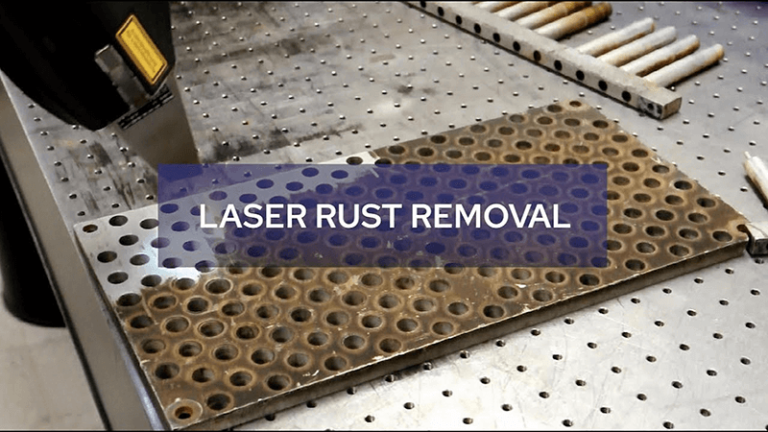
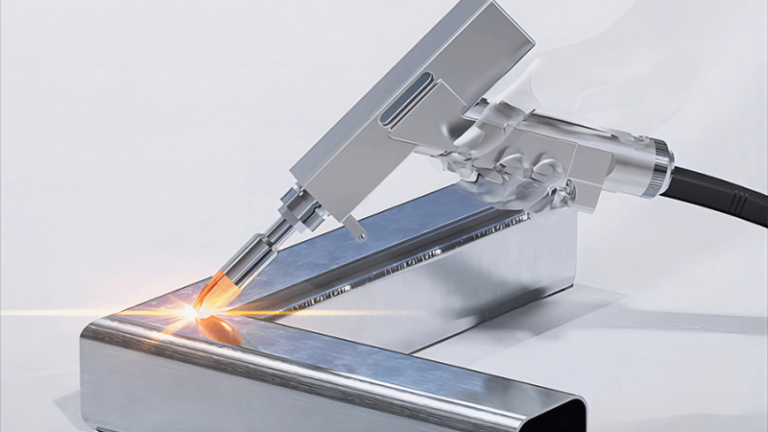
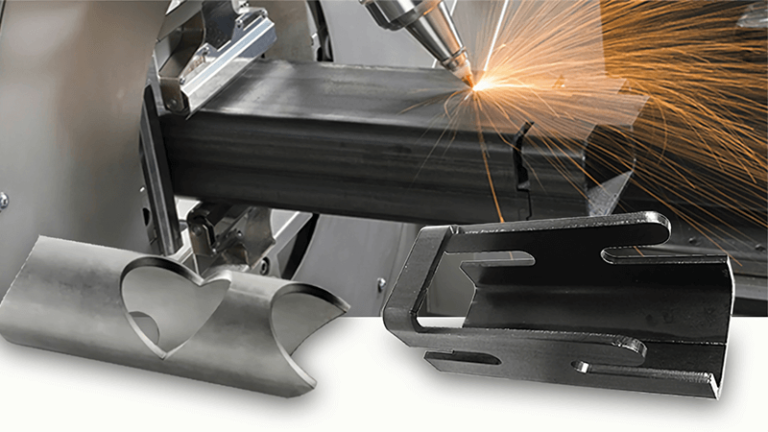
When buyers hear “laser cleaning,” they often worry about one thing first: will it scar, melt, or weaken the metal? I hear that concern all the time, and I understand it because surface damage can turn a good part into scrap.
Laser cleaning does not have to damage the metal surface. In my experience at Kirin Laser, the result depends on the laser type, settings, and target material. A pulsed fiber laser cleaning machine can remove rust, oxide, paint, and other layers with very low impact on the base metal when it is set correctly.
I work in a company that builds and OEMs laser machines, including fiber laser cleaning machines, laser welding machines, laser cutting machines, and laser marking machines. Because of that, I often look at laser cleaning from two angles at once. I think like a manufacturer, and I also think like a buyer who must protect product quality, control cost, and avoid claims. That is why I do not treat laser cleaning as a simple “yes or no” topic. I look at mode selection, surface condition, production goal, and operator control. In this article, I will explain what I have learned from real cases, including one client who needed to remove rust without harming the metal. After switching to our pulsed laser cleaning machine, the rust came off well, and the base surface stayed intact with very little wear. That case made one thing very clear to me: the right cleaning mode matters more than many people think.
Can you laser clean stainless steel?
Stainless steel looks tough, so many people assume any cleaning method will be fine. I do not agree. If the process is too aggressive, the surface finish can change, heat tint can appear, and the final part may no longer meet the customer’s standard.
Yes, I can laser clean stainless steel very effectively with a fiber laser cleaning machine. In most cases, a pulsed laser is the safer choice when I need to remove oxide, rust stains, oil, or light coatings while keeping the base metal and its finish in good condition.
When I talk with distributors and procurement managers, I often say that stainless steel is one of the best examples of why laser cleaning is not just about “power.” It is about control. Stainless steel can handle demanding industrial work, but many stainless applications also require a clean look, stable dimensions, and a surface that will not show damage under inspection. That is why I usually start with pulsed laser cleaning1 when the job involves stainless steel parts, welded seams, molds, tools, kitchen hardware, medical-related components, or decorative pieces.
Why stainless steel responds well to pulsed laser cleaning
I have seen pulsed laser cleaning machines remove oxidation without putting obvious heat stress into the base metal. This is one reason I value cold ablation2 so much. The energy acts more on the unwanted layer than on the solid metal below it. In practical work, that helps me clean rust film, oxide scale, residue, and some coatings while keeping the original surface texture more stable.
I do not say pulsed mode is always the answer for every stainless steel job. I say it is often the better starting point when surface protection matters. CW laser cleaning can also work, but it carries more risk if the settings are too strong or the beam stays too long in one spot. In that case, I may see micro-melting3, color change, or a rougher finish than the client wants.
What I usually check before cleaning stainless steel
Before I recommend a machine or a cleaning setup, I look at several job details:
| Factor | What I check | Why it matters |
|---|---|---|
| Surface condition | Rust, oxide, oil, paint, weld discoloration | Different layers absorb laser energy in different ways |
| Finish requirement | Matte, brushed, polished, mirror-like | Fine finishes need tighter control |
| Part thickness | Thin sheet or thick section | Thin parts are less forgiving with heat |
| Cleaning goal | Spot cleaning, seam cleaning, full-surface cleaning | The goal affects speed and mode choice |
| Production volume | Repair work or batch work | This changes machine choice and workflow |
A practical view from Kirin Laser
From Kirin Laser’s side, I do not like making broad promises that ignore process details. I prefer honest guidance. If a customer tells me they want to clean stainless steel cookware parts, decorative panels, or precision assemblies, I will likely guide them to a pulsed fiber laser cleaning machine. If they just want to remove a heavy layer on a less sensitive industrial part, then I may discuss other options too.
I also tell customers that operator skill4 matters. Even a good machine can give poor results if the scan width, speed, pulse settings, and focal position are wrong. The machine is the tool, but the process is the real solution. That is why I believe technical support matters as much as the machine itself. For long-term partners, that support is often what protects quality and keeps returns low.
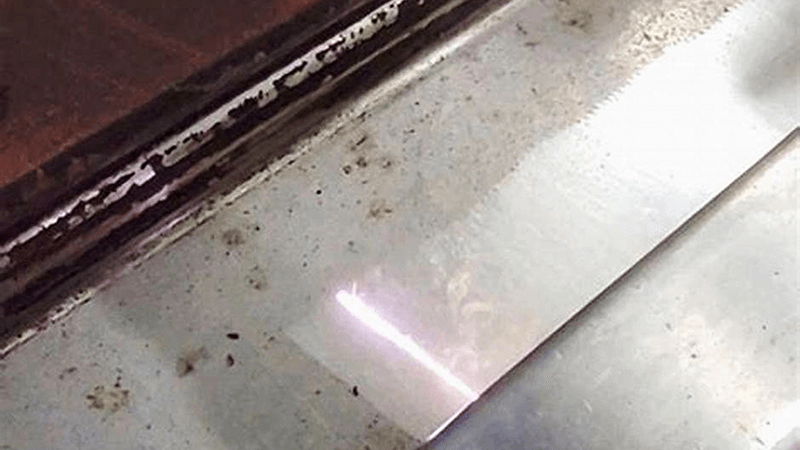
Can a laser cleaner clean aluminum?
Aluminum can be tricky. It is softer than many people expect, and surface appearance often matters a lot. If the cleaning process is too rough or too hot, the part can lose its look, and that can create quality problems fast.
Yes, a laser cleaner can clean aluminum, but the process needs tighter control than many buyers expect. I usually prefer a pulsed fiber laser cleaning machine for aluminum because it helps me remove oxide, residue, and some coatings with lower heat input and less risk to the surface.
Aluminum is one of the materials that reminds me why laser cleaning is not just about removal strength. It is about balance. I need enough energy to lift contamination, but I do not want so much heat that the base material changes. That matters even more when the part is thin, visible, coated later, or used in products where appearance affects value.
Why aluminum needs a careful approach
Aluminum reacts differently from steel. It has high thermal conductivity5, and many aluminum parts are made with surface quality in mind. In many jobs, I am not trying to strip away thick corrosion from a rough heavy plate. I am trying to remove oxide film, oil, light rust-like contamination from attached steel dust, adhesive residue, or pre-treatment contamination before welding, bonding, or coating.
For those jobs, I usually think in terms of precision first. I want a stable cleaning window. I want low damage risk. I want repeatable results across batches. That is why I often recommend pulsed laser cleaning6 instead of a more heat-heavy approach.
When pulsed mode helps most
My insight on this point is simple. I have seen pulsed laser cleaning machines remove oxidation without heat stressing the base metal because of cold ablation7. I have also seen that CW laser cleaning8 can create risk if it is not tuned correctly. On aluminum, that difference becomes even more important. If the settings are too strong, I may see slight melting, shine loss, or texture change. That is not acceptable for many end users.
What I ask before recommending a solution for aluminum
| Question | Why I ask it | What it affects |
|---|---|---|
| Is the aluminum bare or coated? | Coatings behave differently from oxide layers | Laser mode and settings |
| Is the part cosmetic or structural? | Cosmetic parts need better surface control | Acceptable finish range |
| How thick is the part? | Thin parts can distort more easily | Heat input strategy |
| What must be removed? | Oxide, oil, paint, glue, soot, and residue all act differently | Cleaning efficiency |
| What comes next? | Welding, bonding, coating, or direct use | Surface prep standard |
What I tell buyers in real conversations
If I speak with someone like John Smith, a procurement leader who cares about product quality and long-term supply, I focus on outcomes. I explain that aluminum cleaning is very possible, but the right test matters. I do not think the best supplier is the one who says “our machine cleans everything.” I think the best supplier is the one who asks for sample details, checks the target layer, and gives a realistic process plan.
At Kirin Laser, that is the mindset I want to bring to OEM and distributor work. We do not only sell a machine. We help shape the right fit for the market. For aluminum, that often means pulsed fiber laser cleaning with a process that protects the part, keeps cleaning consistent, and supports downstream work like welding or coating. In my view, that is how laser cleaning becomes a reliable business tool, not just a nice demo.
Is laser deep cleaning safe?
“Deep cleaning” sounds useful, but it can also sound dangerous. Many buyers worry that if a laser removes thick rust, stubborn oxides, or layered contamination, it must also be attacking the good metal underneath. That concern is valid, and I never dismiss it.
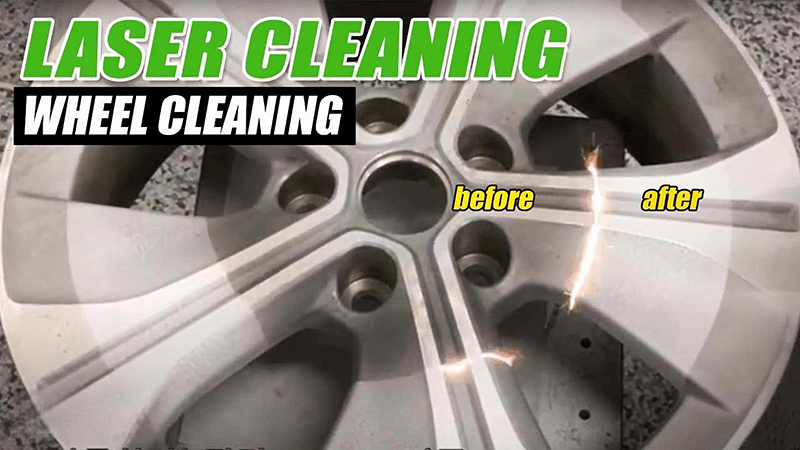
Laser deep cleaning can be safe, but only when I match the machine mode and settings to the job. In my experience, pulsed fiber laser cleaning is safer for sensitive surfaces, while higher-heat methods can work on heavy contamination but need more control to avoid melting, roughening, or changing the base metal.
I think the phrase “deep cleaning” creates confusion because it can mean two different things. Some people use it to mean “remove a very thick or stubborn unwanted layer.” Others use it to mean “clean very thoroughly.” Those are not the same thing. A thorough cleaning can still be gentle. A thick-layer removal job can be aggressive if the process is wrong. So when I talk about safety, I first define the real cleaning target.
Safety depends on more than machine power
A safe laser cleaning process is built on control. I care about beam behavior9, dwell time, scan path, pulse characteristics, and the thermal effect on the workpiece. I also care about the operator, the fixture, the working distance, and the target layer thickness. If even one of those factors is ignored, the process may become less stable.
This is why I do not like oversimplified claims. Laser deep cleaning is not “always safe,” and it is not “always risky.” It is condition-based. When I use the right pulsed fiber laser cleaning machine10, I can often remove contamination in a controlled way while keeping the substrate intact. When I use the wrong setup, I can create problems. That is true of almost any industrial process.
A real example that shaped my view
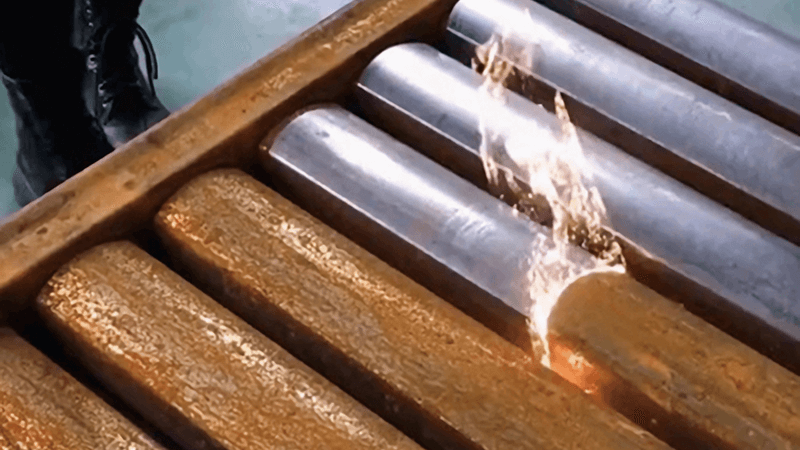
I remember a client who was struggling with rust removal on metal parts11. They had already tried a few methods, but the results were inconsistent. Some methods were too rough. Some were too slow. Some left the surface in a condition the client did not trust. After they used our pulsed laser cleaning machine, the rust came off effectively, and the metal surface stayed intact. That result mattered because they were not only removing rust. They were protecting the value of the part.
That case stayed with me because it showed what buyers really want. They do not want cleaning alone. They want safe cleaning with repeatable quality.
My safety checklist for deep cleaning jobs
| Safety point | What I look for | Risk if ignored |
|---|---|---|
| Laser mode | Pulsed or CW | Wrong mode can raise surface damage risk |
| Layer thickness | Light, medium, or heavy contamination | Poor removal balance |
| Heat sensitivity | Thin parts, polished parts, precision parts | Distortion or finish change |
| Parameter tuning | Speed, frequency, power, focal position | Overcleaning or undercleaning |
| Operator training | Process understanding | Inconsistent results |
| Fume extraction | Proper working environment | Safety and cleanliness issues |
My view as a supplier
From the Kirin Laser point of view, safety is part of product value. A machine that looks strong in a demo but gives unstable results in customer production is not a good machine in business terms. I think a serious supplier must help the buyer choose the right process window. That includes explaining when pulsed cleaning is the better choice and when a high-speed approach needs more caution.
For distributors and OEM partners, this matters a lot. Their reputation sits on every machine they resell. So when I speak about laser deep cleaning, I speak in a careful way. Yes, it can be safe. Yes, it can be very effective. But the result depends on process fit12, not on marketing words. That is the standard I believe buyers should expect.

What can laser cleaning remove?
Many people hear about laser cleaning and assume it is only for rust. That is a common starting point, but it is too narrow. In real industrial work, the value is much broader, and that is one reason I see strong demand for fiber laser cleaning machines.
Laser cleaning can remove rust, oxide layers, paint, oil, grease, soot, coatings, residue, and some adhesives, depending on the material and process setup. In my experience, a fiber laser cleaning machine is most effective when the unwanted layer absorbs the laser energy better than the base metal below it.
When I explain this topic to buyers, I try to keep one principle clear. Laser cleaning13 works best when I want to remove a layer, not destroy the substrate. That seems obvious, but it shapes everything. I first ask: what is the unwanted material, how thick is it, how well is it attached, and what must remain unchanged? Once I know that, I can judge whether laser cleaning is the right fit.
Common materials and layers I see removed
In daily business, the most common removal targets I hear about are rust, oxidation, paint, and industrial residue14. These are often found on metal parts before welding, before painting, before inspection, or during refurbishment. I also see use cases in mold cleaning, tool maintenance, surface prep, and weld seam cleaning.
Here is a practical breakdown:
| Removable layer | Typical use case | Notes from my experience |
|---|---|---|
| Rust | Steel parts, maintenance, restoration | One of the most common laser cleaning jobs |
| Oxide layer | Stainless steel, aluminum, weld zones | Pulsed mode often gives better control |
| Paint | Rework areas, selective stripping | Good for localized removal |
| Oil and grease | Pre-weld and pre-bond cleaning | Surface prep can improve downstream quality |
| Soot and carbon residue | Industrial repair and maintenance | Often removed without contact |
| Coatings | Partial stripping or surface correction | Depends on coating type and thickness |
| Adhesive residue | Rework or refurbishing | Needs testing for best results |
What laser cleaning may not remove equally well
I think it is important to be honest here. Not every layer comes off with the same speed or efficiency. Some thick coatings may need more passes. Some mixed contamination layers are harder than they look. Some jobs that involve very soft substrates or unusual compounds need testing first. I do not think that is a weakness. I think that is normal industrial reality.
What matters is whether the supplier gives a clear answer before the sale. At Kirin Laser, I believe the buyer deserves a practical process discussion, not vague claims. If the target is heavy rust on steel, the path may be simple. If the target is layered coating on aluminum with a cosmetic finish requirement, the path needs more care.
Why this matters for distributors and procurement teams
For a buyer in distribution, the range of removable materials affects sales potential. A machine that only solves one small problem is harder to position. A machine that can handle rust, oxide, paint, residue, and surface prep becomes more useful across industries. That makes it easier to sell into manufacturing, repair, fabrication, automotive parts, hardware, and more.
I see this as one of the strong points of fiber laser cleaning machines15. The process is contact-free. It is easy to focus on selected areas. It can reduce consumables from traditional methods. It can also support cleaner workflow in many shops. Still, I always come back to the same point: removal ability depends on matching the machine and settings to the job. Good results do not happen because a brochure says “multi-purpose.” They happen because the process has been thought through.

Conclusion
From my point of view at Kirin Laser, laser cleaning does not have to damage metal surfaces. The real answer depends on material, contamination, laser mode, and parameter control. For stainless steel and aluminum, I usually trust pulsed fiber laser cleaning more when surface protection matters. For deep cleaning, safety comes from the right setup, not from high power alone. And when people ask what laser cleaning can remove, the list is wide, from rust and oxide to paint and residue. I believe the best result comes when I choose the process with care and support it with real testing, clear guidance, and long-term technical support.
-
Discover why pulsed laser cleaning is preferred for maintaining the integrity and appearance of stainless steel surfaces. ↩
-
Learn how cold ablation minimizes heat stress on metals, preserving their original texture during cleaning. ↩
-
Understand the risks of micro-melting and how to avoid it for a smoother finish on stainless steel. ↩
-
Explore how skilled operators can optimize laser settings to achieve the best cleaning results and maintain quality. ↩
-
Understanding aluminum's thermal conductivity helps in selecting the right laser cleaning method to avoid damaging the material. ↩
-
Pulsed laser cleaning is crucial for aluminum to prevent heat damage, making it essential to understand its benefits and applications. ↩
-
Cold ablation allows for effective cleaning without heating the base metal, which is vital for maintaining aluminum's integrity. ↩
-
CW laser cleaning can cause damage if not properly tuned, so it's important to know the potential risks and how to mitigate them. ↩
-
Understanding beam behavior is crucial for optimizing laser cleaning processes and ensuring safety and effectiveness. ↩
-
Exploring this will help you understand why pulsed fiber lasers are effective for controlled cleaning without damaging substrates. ↩
-
Discovering effective rust removal methods can save time and preserve the integrity of metal parts. ↩
-
Understanding process fit helps in selecting the right cleaning method, ensuring safety and effectiveness. ↩
-
Understanding laser cleaning can help you explore its benefits and applications in various industries. ↩
-
Learn how laser cleaning effectively removes common contaminants, enhancing the quality of metal parts. ↩
-
Explore the benefits of fiber laser cleaning machines, including contact-free cleaning and reduced consumables. ↩