I often see new operators think fiber laser cutting is simple. They load a sheet, press start, and expect clean parts. Then rough edges, wasted material, and lost time show up fast.
Laser cutter operations usually include cutting, piercing, and engraving or marking support functions, while the correct operating steps start with machine inspection, parameter setup, focus calibration, gas check, material positioning, test cutting, and then full production. When I follow this workflow, I get better cut quality, lower scrap, and more stable output.
From my perspective at Kirin Laser, fiber laser cutting is never just about turning on a machine. I see it as a full process. I need the right machine, the right setup, the right parameters, and the right habits from the operator. Kirin Laser produces and OEMs laser machinery, including laser cleaning machines, laser welding machines, laser cutting machines, and laser marking machines. So when I talk about these questions here, I am speaking specifically about the real workflow of a fiber laser cutting machine. I have seen that once an operator understands the sequence and respects the basics, both productivity and cut quality improve in a very clear way.

How does a laser cutter work step by step?
I have seen many operators struggle in the first few days. They often assume the machine does all the thinking for them. That is where problems start. The machine is powerful, but the workflow still depends on me.
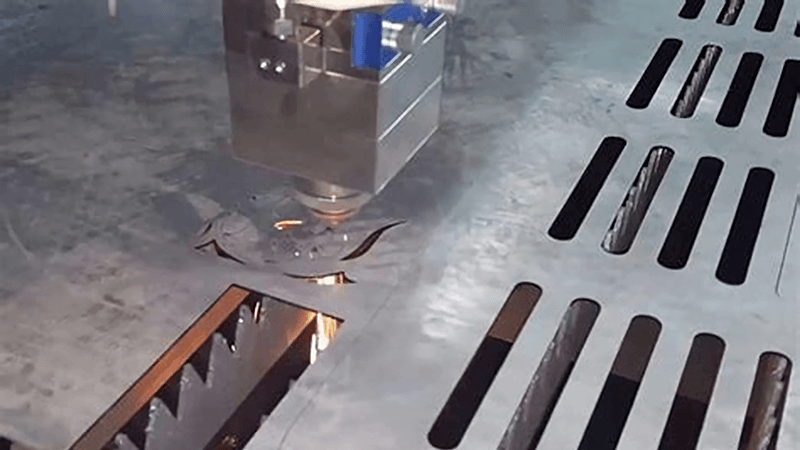
A fiber laser cutter works step by step by generating a high-energy laser beam, transmitting it through fiber optics, focusing it on the material surface, melting or vaporizing the target area, and using assist gas to remove molten material while the motion system follows the programmed cutting path.
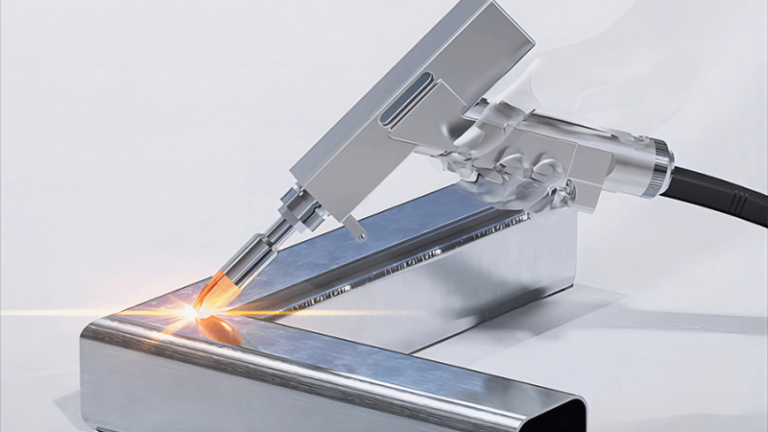
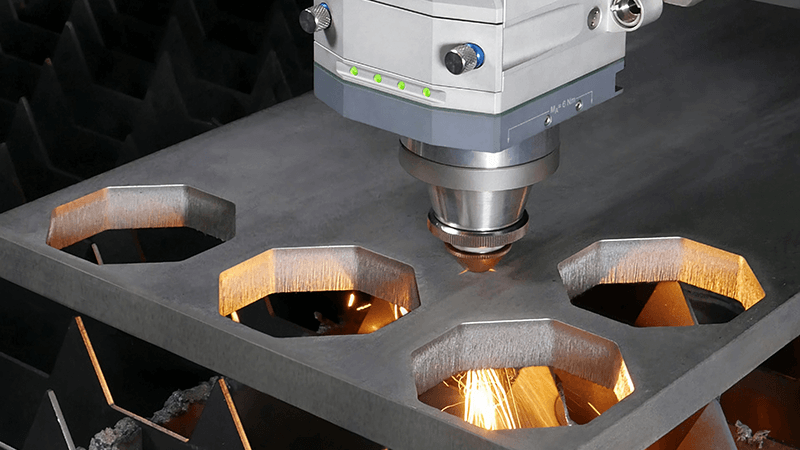
At Kirin Laser, I explain the process in a simple way because operators need something practical. A fiber laser cutter1 is a system, not just a beam. The source creates the laser. The beam travels through the fiber. The cutting head focuses the beam into a very small point. That point creates high energy density on the metal surface. Then the material heats up very fast. It melts, and in some cases partly vaporizes. After that, assist gas pushes the molten material out of the kerf. The motion system moves the head or the sheet according to the cutting file, and the machine forms the final shape.
Step 1: Power generation and beam creation
The fiber laser source creates the beam. This is where the energy starts. In a good fiber laser cutting machine, the source must stay stable. If the source output is unstable, cut quality becomes unstable too.
Step 2: Beam transmission
The beam travels through an optical fiber to the cutting head. This is one reason fiber laser machines are efficient and compact. I do not need the same mirror path design used in some older systems.
Step 3: Beam focusing
The lens in the cutting head focuses the beam onto a very small spot on the sheet. This matters a lot. If the focus position is off, I may get rough edges, dross, or incomplete cuts.
Step 4: Material heating and removal
The focused beam melts the metal. Then assist gas2 such as nitrogen, oxygen, or air helps remove the molten metal from the cut zone. The gas choice changes the result. Nitrogen helps with cleaner edges on stainless steel. Oxygen can support cutting on carbon steel. Air can lower running cost in some jobs.
Step 5: Motion control and path execution
The CNC system3 controls the path. The cutting head follows the design file. The machine must keep the right speed, height, and corner control. If I push speed too far, cut quality drops. If I go too slow, heat buildup can also create problems.
| Step | What Happens | Why It Matters |
|---|---|---|
| Beam generation | The laser source creates energy | Stable source supports stable cutting |
| Beam transmission | Fiber carries the beam to the head | Efficient and compact system |
| Beam focusing | Lens concentrates energy on the sheet | Focus affects edge quality |
| Material removal | Beam melts metal and gas clears kerf | Clean removal improves cut result |
| Motion execution | CNC follows the cutting path | Precision depends on movement control |
I often tell clients that understanding this process helps them solve problems faster. I remember one client who kept getting rough edges and wasting sheets. He thought the machine itself was faulty. But when we checked the process, the real issue was not the hardware. His team had skipped focus calibration and gas checks. After we walked him through the proper fiber laser cutting steps, his scrap rate4 dropped quickly, and his orders finally went out on time. That case stayed with me because it showed how important the step-by-step workflow really is.
How do lasers work step by step?
I know this question sounds broader, but in real factory use, I still answer it in a practical way. Operators do not need a full physics lecture first. They need a clear working idea that connects to machine use.
Lasers work step by step by exciting a gain medium, building light energy inside a resonator, amplifying that light into a coherent beam, directing the beam to the work area, and focusing it into a high-energy point that can heat, melt, mark, weld, or cut material with precision.
From the Kirin Laser side, I explain lasers as controlled energy. In a fiber laser cutting machine5, the beam is not random light. It is concentrated, directed, and stable enough to do real industrial work. That is what makes it useful.
The basic laser creation process
First, energy enters the laser system. This energy excites the gain medium. In a fiber laser, that gain medium is optical fiber doped with rare-earth elements6. Then light builds inside the system and becomes amplified. The system shapes that amplified light into a coherent laser beam7. That beam has a very high energy density compared with ordinary light.
Why coherence matters in real use
Coherence means the light behaves in a controlled and unified way. For me, the practical meaning is simple: the energy can be focused into a very small point. That is why fiber lasers can cut metal with speed and precision. If the beam were not controlled, I would not get the same clean and repeatable results.
How that becomes cutting power
After the beam is generated, it moves through the fiber to the cutting head. The lens focuses it onto the material. The small spot carries enough power to melt the sheet in a controlled line. The CNC system and assist gas8 then turn that energy into a usable manufacturing process.
Why operators should care
Some operators think laser principles are only for engineers. I do not agree. I believe a basic understanding helps operators make better decisions. When I know that focus, beam quality, gas flow, and material condition all affect energy transfer, I stop treating setup as a small detail. I start treating it as the foundation of the cut.
| Laser Stage | Simple Meaning | Effect on Production |
|---|---|---|
| Energy input | Power enters the laser system | Makes beam generation possible |
| Light amplification | Light becomes stronger and controlled | Creates usable laser energy |
| Beam delivery | Beam moves to the cutting head | Supports stable operation |
| Beam focusing | Energy is concentrated into a small point | Makes precision cutting possible |
| Material interaction | Beam heats and removes material | Produces the final result |
At Kirin Laser, I always connect theory to output. That is because our customers do not buy concepts. They buy results. They need machines that help them cut stainless steel, carbon steel, aluminum, and other metals with speed and consistency. So even when I explain how lasers work, I keep the operator in mind. I want that explanation to help reduce downtime, reduce scrap, and improve confidence on the shop floor.

What are the three types of operations the laser cutter can perform?
I often find that people use the term “laser cutter operations” in a loose way. Some mean the machine functions. Some mean material processes. In fiber laser cutting, I usually explain the main operations in a practical production sense.
The three main operations a laser cutter can perform are piercing, cutting, and engraving or marking-related light processing functions, depending on the machine design and application setup. In daily production, piercing starts the cut, cutting forms the final shape, and light surface processing may support identification or layout tasks.
At Kirin Laser, I focus here on fiber laser cutting machines. In actual sheet metal work, I see three core operations matter most.
1. Piercing
Before the machine can cut an enclosed contour, it often needs to pierce the material first. This means the laser creates an entry point in the sheet. Piercing is more important than many beginners think. A poor pierce can splash material back, damage the nozzle, or leave a defect at the start point. That is why I always pay attention to pierce time, power, and gas setup9.
2. Cutting
This is the main operation. After piercing, the machine follows the programmed path and cuts the shape. Straight lines, holes, corners, curves, and nested parts all depend on stable cutting parameters10. This stage needs the best balance of power, speed, focus, gas pressure, and head height.
3. Engraving, etching, or marking support functions
Some users group these light-duty surface operations with laser cutter capability, especially when the machine or workflow supports part identification, line marking, or shallow trace work. In many industrial settings, this is not the primary job of a fiber laser cutter, but it can still be part of the workflow for layout marks, numbers, or production guidance. I think it is useful to mention this because many buyers ask about more than pure through-cutting.
How I explain this to buyers and operators
I tell them that a fiber laser cutter does not just “cut metal.” It handles a sequence of actions. First, it enters the sheet. Then it forms the path. In some workflows, it also supports surface-level processing tasks11. When operators understand that each operation has different parameter needs, they make fewer mistakes.
| Operation | What It Does | Key Operator Concern |
|---|---|---|
| Piercing | Creates the starting hole in the material | Avoid splashback and nozzle damage |
| Cutting | Follows the contour and separates the part | Control edge quality and speed |
| Marking support | Adds surface marks or reference lines | Keep power and depth under control |
I have seen operators focus only on cutting speed and ignore piercing quality. That usually leads to trouble. A bad pierce can ruin the rest of the cut before it even starts. I have also seen users ask a cutting machine to do tasks outside its best use range. That is why I always match the operation type to the machine’s real design12 and the customer’s real production goals. At Kirin Laser, that practical matching matters because our role is not only to sell equipment. Our role is to help buyers choose the right setup and use it the right way.
What are the basics of laser operation?
I have found that most cutting problems begin with basic steps being skipped. Operators often look for a complex cause first. In many cases, the cause is simple. Focus is off. Gas is wrong. The sheet is dirty. The nozzle is damaged. The parameter file does not match the material.
The basics of laser operation include machine inspection, lens and nozzle check, focus calibration, assist gas confirmation, material setup, parameter selection, test cutting, safe monitoring during production, and regular maintenance after the job. These basics create the conditions for stable and efficient cutting.
At Kirin Laser, I tell every operator that good cutting starts before the beam touches the sheet. The setup stage decides a lot of the result.
Start with machine inspection
I check the machine before production. I look at the nozzle, lens condition, protective window, gas supply, cooling system, and worktable area. I make sure there is no obvious dust, looseness, or damage. This step does not take long, but it prevents many bigger issues.
Confirm the material and setup
I verify the material type, thickness, surface condition13, and sheet placement. The cutting parameters for carbon steel are not the same as those for stainless steel or aluminum. A wrong setup here can waste a whole batch.
Set focus, gas, and parameters
This is the step I see skipped too often. I check focus calibration. I set the assist gas type and pressure14. I load or adjust the cutting parameters based on the material and thickness. I do not assume yesterday’s file is right for today’s job.
Run a test cut first
I always prefer a test cut before full production, especially with a new job. A small test helps me check edge quality, kerf, burr level, pierce quality, and dimensional result. This is much cheaper than learning from a full sheet of scrap.
Monitor during production
Even after the cut starts, my job is not finished. I watch sparks, edge condition, nozzle distance, and machine behavior. If something changes, I stop and check. Small changes can become bigger losses fast.
Maintain after operation
When production ends, I clean key parts, inspect consumables, and record issues. This helps the next shift and protects long-term machine condition.
| Basic Step | What I Do | Why It Helps |
|---|---|---|
| Pre-use inspection | Check nozzle, lens, gas, cooling, table | Prevents avoidable faults |
| Material check | Confirm type, thickness, placement | Matches process to job |
| Parameter setup | Set focus, speed, power, gas pressure | Supports clean cutting |
| Test cut | Verify quality before mass cutting | Reduces scrap risk |
| Process monitoring | Watch cut condition during work | Catches issues early |
| Post-use maintenance | Clean and inspect key parts | Extends machine life |
This is where my earlier client story fits best. He kept getting rough edges and losing sheets. He believed the machine had a quality problem. But his operators had skipped focus calibration15 and gas checks. Once we walked them through the basics in the right order, the result changed quickly. Scrap dropped. Confidence improved. Delivery got back on schedule. That is why I keep saying the same thing: fiber laser cutting is not just “press and cut.” It is a workflow. When I get the workflow right, the machine can do what it is built to do.
As a company that produces and OEMs laser equipment, Kirin Laser cares a lot about this point. We build laser cleaning machines, laser welding machines, laser cutting machines, and laser marking machines. But strong hardware alone is not enough. I believe customers get the best value only when machine quality and operator discipline16 work together. That is where real productivity comes from.

Conclusion
From my view at Kirin Laser, fiber laser cutter operations are simple to name but serious to execute. I see the core workflow as piercing, cutting, and controlled surface processing support, all built on good operating basics. I always start with inspection, focus, gas, material setup, parameters, and test cutting before full production. I have seen that when operators follow these steps, cut quality improves, scrap drops, and delivery becomes more stable. For me, that is the real value of understanding fiber laser cutting. It turns a powerful machine into a dependable production tool.
-
Understanding the fiber laser cutter system can enhance your knowledge of modern cutting technology and its practical applications. ↩
-
Exploring the role of assist gas can reveal how it influences cut quality and efficiency in laser cutting operations. ↩
-
Understanding the CNC system's role can provide insights into achieving precision and accuracy in laser cutting. ↩
-
Exploring ways to reduce scrap rate can lead to more efficient production and cost savings in manufacturing processes. ↩
-
Understanding fiber laser cutting machines can enhance your knowledge of industrial applications and precision cutting technology. ↩
-
Exploring the role of rare-earth elements in fiber lasers can provide insights into their importance in enhancing laser performance. ↩
-
Learning about coherent laser beams can help you appreciate their role in achieving high precision and clean cuts in manufacturing. ↩
-
Discovering the synergy between CNC systems and assist gas can reveal how they optimize the laser cutting process for better results. ↩
-
Understanding the impact of pierce time, power, and gas setup can help optimize laser cutting quality and prevent defects. ↩
-
Exploring stable cutting parameters ensures precision and efficiency in laser cutting operations. ↩
-
Learning about surface-level processing tasks can expand the capabilities of laser cutting beyond just cutting metal. ↩
-
Matching operation type to machine design ensures optimal performance and aligns with production goals. ↩
-
Exploring how these factors influence laser cutting can help optimize settings and improve cutting quality, reducing waste and enhancing efficiency. ↩
-
Assist gas type and pressure are key to achieving clean cuts. Understanding their impact can improve cutting results and reduce defects. ↩
-
Focus calibration is essential for precision in laser cutting. Learning about its role can enhance cutting accuracy and reduce errors. ↩
-
Operator discipline ensures adherence to procedures, maximizing machine performance and productivity, and reducing errors and waste. ↩