Many people see laser cutting machines in factories, but they still do not understand how the technology actually works. I often meet distributors and buyers who know the results but cannot clearly explain the process.
A laser cutter works by focusing a high-energy laser beam onto a material surface. The intense heat melts, burns, or vaporizes the material, while assist gas removes molten debris to create a precise and clean cut.
When I started working in the laser industry, I also needed time to fully understand the physics and engineering behind laser cutting. At Kirin Laser, we design and manufacture several types of laser machines. These include laser cutting machines, welding machines, cleaning machines, and marking systems. Over time I learned that understanding how laser cutters work helps distributors explain the technology better to their customers.

How Does a Laser Cutter Work Step by Step?
Many people imagine laser cutting as a simple beam slicing through metal. In reality, the process involves several coordinated steps working together.
A laser cutter works through a sequence of steps: generating the laser beam, focusing the beam through optics, directing it with motion systems, melting the material with heat energy, and removing molten material with assist gas to produce a clean cut.
Step-by-Step Laser Cutting Process
The process begins inside the laser source. The source generates the laser beam. Then optical components guide and focus the beam. The focused energy hits the material surface and melts or vaporizes it.
Finally, assist gas1 pushes molten material away.
Main Steps in Laser Cutting
| Step | Process | Purpose |
|---|---|---|
| Laser Generation | Laser source creates a high-energy beam | Produces cutting energy |
| Beam Delivery | Mirrors or fiber optics guide the beam | Directs the beam to the cutting head |
| Focusing | Lens concentrates the beam to a small point | Increases energy density |
| Material Interaction | Heat melts or vaporizes material | Creates the cut |
| Assist Gas Removal | Gas blows away molten material | Keeps the cut clean |
Laser Source Creation
The first step happens inside the laser generator. In CO₂ machines, gas molecules create the laser beam. In fiber machines, the beam is amplified through optical fiber.
This step determines the power and stability of the machine.
Beam Focusing and Movement
The beam then travels through optical components2. In fiber laser cutters, the beam travels through fiber cables. In CO₂ systems, mirrors guide the beam.
The cutting head focuses the beam into a very small spot. This spot carries extreme energy density.
Material Melting and Gas Assistance
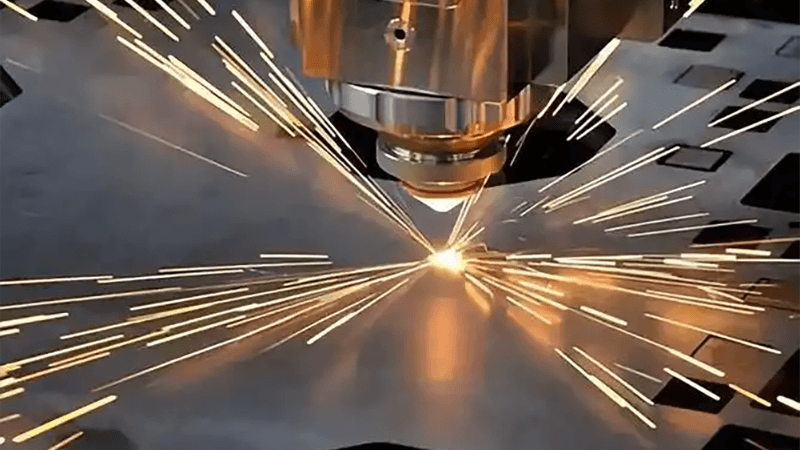
When the beam touches the material, heat rises instantly. The material melts or vaporizes. Assist gas removes the molten material.
At Kirin Laser, we usually use nitrogen or oxygen depending on the material.
This combination of heat and gas produces a smooth cutting edge.
How Does Laser Cutting Actually Work?
Many customers ask this question when they first see a laser machine. They want to understand what really happens when the beam meets the material.
Laser cutting works by concentrating a powerful beam of light onto a tiny point. This concentrated energy heats the material rapidly until it melts or vaporizes, while assist gas clears the cutting path to maintain accuracy and edge quality.
Energy Density Is the Key
The real power of laser cutting comes from energy concentration3. A laser beam may only be a few millimeters wide before focusing. After focusing, the spot size becomes extremely small.
This creates very high heat intensity.
Interaction Between Laser and Material
Different materials react differently to laser energy.
| Material Type | Reaction to Laser | Typical Laser Type |
|---|---|---|
| Acrylic | Vaporizes smoothly | CO₂ Laser |
| Wood | Burns and evaporates | CO₂ Laser |
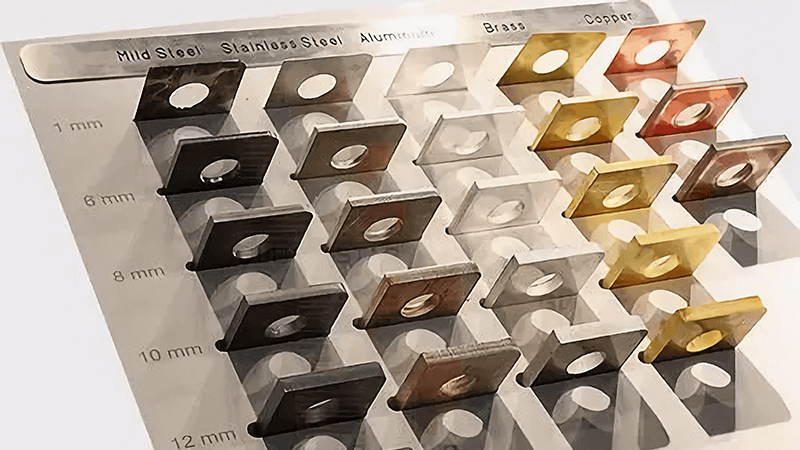
| Stainless Steel | Melts and oxidizes | Fiber Laser |
| Carbon Steel | Melts with oxygen assist | Fiber Laser |
| Aluminum | Reflective but meltable | Fiber Laser |
CO₂ vs Fiber Laser Mechanism
From my experience, many distributors struggle to explain this difference. I once worked with a distributor who had this exact problem. His customers often asked why two machines looked similar but had different prices.
So we arranged a simple demonstration.
We used a CO₂ laser cutter4 to process acrylic sheets. The cut edges looked very smooth. Then we used a fiber laser machine to cut stainless steel. The speed was very impressive.
After that demonstration, his sales conversations became much easier.
How the Two Laser Types Generate Beams
| Laser Type | Beam Generation Method | Best Application |
|---|---|---|
| CO₂ Laser | Gas mixture creates laser beam | Non-metal materials |
| Fiber Laser | Optical fiber amplifies light | Metal materials |
At Kirin Laser, we design both types of machines because different industries need different solutions.
Understanding this principle helps distributors guide their customers toward the right machine.
What Are the Disadvantages of Laser Cutters?
Laser cutting is powerful technology. But like any manufacturing tool, it also has limitations. I always explain these honestly to partners and distributors.
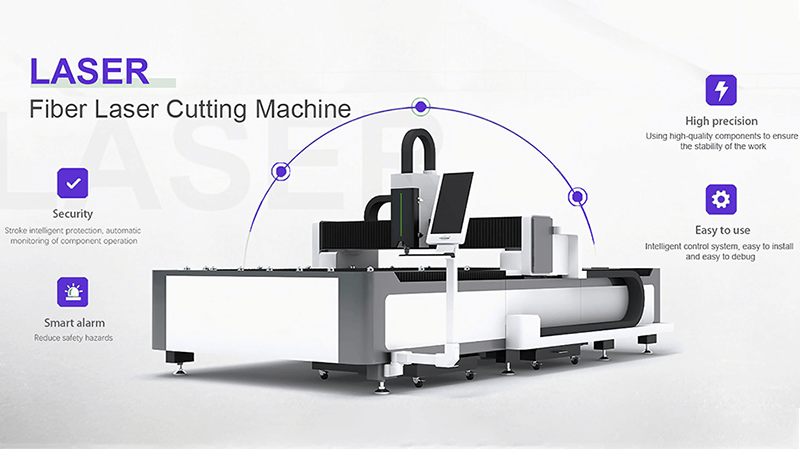
Laser cutters have some disadvantages such as higher initial investment, limitations with very thick materials, reflective metal challenges for certain systems, and the need for trained operators and proper ventilation.
Initial Investment Cost
Laser machines require advanced technology. The laser source, motion system, and optical components all increase cost.
This means the initial purchase price5 can be higher than traditional cutting machines.
However, operating cost is often lower over time.
Material Thickness Limitations
Laser cutting works best within certain thickness ranges.
| Material | Typical Efficient Thickness |
|---|---|
| Carbon Steel | Up to 25mm (fiber laser) |
| Stainless Steel | Up to 20mm |
| Acrylic | Up to 30mm (CO₂) |
| Aluminum | Up to 12mm |
For extremely thick materials, other cutting technologies may perform better.
Reflective Material Challenges
Some metals reflect laser energy. Aluminum and copper can reflect light strongly.
Older laser machines struggled with this problem.
Modern fiber laser machines have improved greatly, but reflective materials6 still require proper machine configuration.
Operator Training Requirements
Laser machines are advanced equipment. Operators must understand machine settings and safety procedures.
Training is necessary.
Maintenance and Safety
Laser cutting produces heat, fumes, and sparks. Factories must install ventilation systems.
Regular maintenance also keeps the machine running well.
At Kirin Laser, we support distributors with training materials and technical guidance. This helps reduce these disadvantages and improves customer confidence.
Can You Laser Cut Melamine?
Melamine is common in furniture manufacturing. Many people ask whether laser machines can cut this material effectively.
Yes, melamine can be laser cut using CO₂ laser cutting machines. The laser beam heats and vaporizes the resin-coated surface, allowing precise cutting for furniture panels and decorative components.
Understanding Melamine Material
Melamine boards are usually made from wood particle boards covered with melamine resin layers.
This coating improves durability and surface finish.
Laser Compatibility with Melamine
CO₂ lasers interact well with organic materials.
| Material | Suitable Laser Type | Cutting Quality |
|---|---|---|
| MDF | CO₂ Laser | Smooth edges |
| Plywood | CO₂ Laser | Clean cuts |
| Melamine Board | CO₂ Laser | Good precision |
| Acrylic | CO₂ Laser | Very smooth |
Advantages of Laser Cutting Melamine
Laser cutting offers several advantages for melamine processing.
First, the cutting precision7 is very high. This is important for furniture parts.
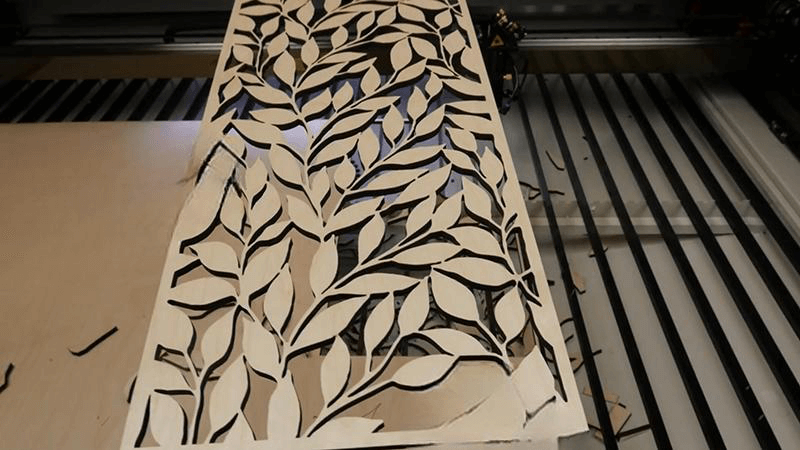
Second, complex shapes become easy to produce.
Third, there is no physical tool contact with the material.
Things to Consider
However, melamine cutting also requires proper settings.
The resin layer can produce fumes when heated. Good ventilation systems are necessary.
Cutting parameters must also be adjusted carefully to prevent edge burning.
Practical Example From My Experience
I remember working with a furniture manufacturer who wanted to produce decorative panels.
Traditional saws produced rough edges. Post-processing took time.
When we introduced a CO₂ laser cutter8, the manufacturer could create intricate patterns directly on melamine panels.
Production efficiency improved significantly.
This is one reason why CO₂ laser machines remain popular in woodworking and furniture industries.
Conclusion
Laser cutters operate by focusing concentrated energy onto materials to melt or vaporize them while assist gas removes debris to form precise cuts. The technology works differently depending on the laser source, with CO₂ lasers ideal for non-metal materials and fiber lasers optimized for metal cutting. From my experience at Kirin Laser, understanding how laser cutting works helps distributors explain the technology clearly to customers. While the machines have some limitations, their precision, flexibility, and efficiency make them one of the most valuable tools in modern manufacturing.
-
Exploring assist gas usage reveals its importance in achieving clean cuts by removing molten material, enhancing the overall cutting process. ↩
-
Understanding optical components helps in grasping how laser beams are precisely guided and focused, crucial for efficient cutting. ↩
-
Understanding energy concentration in laser cutting reveals how lasers achieve high precision and efficiency, making it crucial for selecting the right equipment. ↩
-
Discover why CO₂ laser cutters are ideal for smooth, precise cuts on acrylic, enhancing your projects with professional quality. ↩
-
Understanding the initial purchase price helps businesses budget effectively and compare costs with traditional cutting methods. ↩
-
Exploring how modern machines handle reflective materials can guide users in choosing the right equipment for specific materials. ↩
-
Discover how laser cutting precision enhances melamine board production, ensuring high-quality, intricate designs with minimal post-processing. ↩
-
A CO₂ laser cutter enhances production efficiency by allowing precise and intricate cuts on materials like melamine, reducing post-processing time. ↩